
Our Team
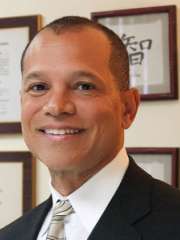
Keith Norris, MD
Dr. Keith C. Norris is an internationally recognized clinician scientist and health policy leader who has been instrumental in shaping national health policy and clinical practice guidelines for chronic kidney disease (CKD). He has made major contributions to inclusive excellence while addressing disparities in contemporary society. In 1995, he was invited to join the inaugural National Kidney Foundation (NKF) Kidney Disease Outcomes Quality Initiative, where he worked for over a decade helping to transform Medicare based practice guidelines and performance measures for patients with chronic kidney disease. He was also a founding member of the Medicare End-Stage Renal Disease (ESRD) continuous Performance Measures workgroup. He presently serves as a member of the NKF Kidney Early Evaluation Program (KEEP) executive committee, the American Association of Kidney Patients (AAKP) Medical Advisory Board, co-chair of the ESRD Network 3 Medical Review Board and a member of the ESRD Forum Medical Advisory Board.
He was a Principal Investigator for the multi-site NIH funded African American Study of Kidney Disease and Hypertension (AASK) and the AASK Cohort Study, the largest comparative drug intervention trial focusing on renal outcomes conducted in African Americans. Dr. Norris was the founding Principal Investigator for the first national translational research network dedicated to reducing health disparities, the NIH-Research Centers in Minority Institutions Translational Research Network. He has extensive experience in patient recruitment and retention, and community-partnered research within the South Los Angeles community. Presently, he directs several NIH research and training grants including the NIH Diversity Program Consortium Coordination and Evaluation Center at UCLA, the centerpiece of the NIH initiative to enhance diversity in the biomedical workforce.
Dr. Norris has received numerous honors and awards from students, peers, community, and professional organizations. He serves as the Editor-in-Chief Emeritus of the international journal Ethnicity and Disease, and a member of the editor board for the Journal of the American Society of Nephrology and the Clinical Journal of the American Society of Nephrology.
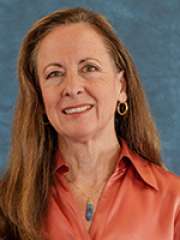
Katherine R. Tuttle, MD, FASN, FACP, FNKF
Katherine R. Tuttle, MD, FASN, FACP, FNKF, is Executive Director for Research at Providence Health Care, Co-Principal Investigator of the Institute of Translational Health Sciences and Professor of Medicine at the University of Washington. Dr. Tuttle earned her medical degree and completed her residency in Internal Medicine at Northwestern University School of Medicine in Chicago, Illinois. She was a fellow in Metabolism and Endocrinology at Washington University in St. Louis, Missouri. Her Nephrology fellowship training was performed at University of Texas Health Science Center in San Antonio, Texas.
Dr. Tuttle’s major research interests are in clinical and translational science for diabetes and chronic kidney disease. She has published over 200 original research contributions and served two terms as Associate Editor for the Clinical Journal of the American Society of Nephrology and the American Journal of Kidney Disease. Dr. Tuttle has received many honors and awards including the Medal of Excellence from the American Association of Kidney Patients, Garbed Eknoyan Award from the National Kidney Foundation, the YWCA Woman of Achievement Award in Science, and two Outstanding Clinical Faculty Awards at the University of Washington. Dr. Tuttle served on the Board of Directors for the Kidney Health Initiative and has chaired numerous kidney and diabetes related working groups and committees for organizations including the NIDDK/NIH, the National Kidney Foundation, the American Society of Nephrology, the International Society of Nephrology, and the American Diabetes Association.
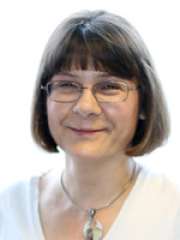
Radica Alicic, MD, FHM, FACP
Dr. Radica Alicic is an Associated Director for Research at Providence Health Care and Clinical Professor at Department of Medicine, University of Washington. She received Medical and Master of Science degrees at the University of Sarajevo Medical School in Bosnia. She serves on the editorial board for the Journal of the Clinical Medicine, and is a member of National Kidney Foundations and Kidney Disease: Improving Global Outcomes kidney and diabetes related work groups. Her research interests include pragmatic design and implementation of the interventions to improve screening, early recognition and management of the chronic kidney disease, diabetes and hypertension in the real life setting, including acute care.
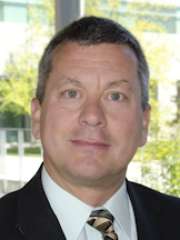
Kenn Daratha
Kenn B. Daratha, PhD is a bio-informatics and bio-statistics scientist at the Providence Medical Research Center and serves on the doctoral faculty at the Providence Sacred Heart Medical Center and Gonzaga University School of Anesthesia. He also teaches at the Washington State University College of Nursing and the University of Washington School of Medicine. Dr. Daratha is well known for his expertise in evidence based practice, statistics and informatics. He is the chief architect and developer for the Center for Kidney Disease Research, Education and Hope (CURE-CKD) repository and registry. Dr. Daratha’s academic career has included 35 years of teaching and more than 20 years as a research scientist. He has an extensive grant and publication record. His relevant industry experience includes Chief Information Officer for a multi-hospital system and lead architect for the development of data warehouse and decision support systems for a large insurance company. Dr. Daratha has led and mentored research teams in the use of electronic health record (EHR) data to complete research and quality improvement projects in a variety of disciplines
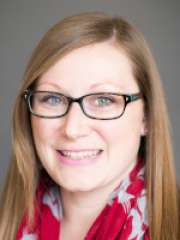
Cami Jones
Cami R. Jones, PhD is a Data Analyst at Providence Medical Research Center and serves as a biostatistics and bioinformatics consultant. Dr. Jones provides guidance on developing electronic health records (EHR) based databases for use in research and quality improvement projects across multiple health disciplines. She also serves as a mentor to University of Washington School of Medicine students conducting evidence-based research projects. Dr. Jones provisions analytical-ready datasets for federal- and industry-funded research projects using CURE-CKD Registry data. She reviews data specifications for EHR data extraction and tests the validity of data structures in the CURE-CKD Registry. Dr. Jones has expertise in developing customized data capture tools and provides services in grant management (pre- and post-award), statistical analysis (descriptive and bivariate analyses), and manuscript preparation (writing and image production).
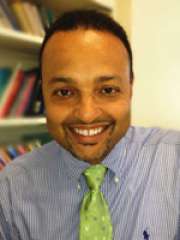
Kenrik Duru, MD
O. Kenrik Duru, MD, MSHS, Professor, Department of Medicine, David Geffen School of Medicine, received a Doctorate of Medicine from the University of California San Francisco and a Master of Science in Health Services from the UCLA Fielding School of Public Health. Dr. Duru's research interests include enhancing physical activity among minority seniors and designing interventions to reduce disparities in medication adherence and clinical outcomes among patients with diabetes.
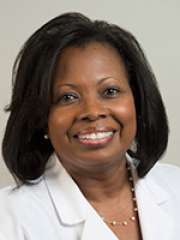
Susanne B. Nicholas, MD, PhD
Dr. Susanne Nicholas is a tenured Associate Professor of Medicine at UCLA in the Division of Nephrology where she maintains her clinical responsibilities, and the Division of Endocrinology, Diabetes and Hypertension, where she conducts her research. She is also a Clinical Hypertension Specialist. Dr. Nicholas’ research interests are to: understand and identify key factors that promote the pathogenesis of diabetic kidney disease (DKD); uncover and validate novel biomarkers that may predict DKD progression; and to quantify renal structural changes associated with DKD in response to novel therapeutics, using stereology principles. Her research over the past 15+ years has led to the identification of a novel biomarker of DKD, which is being validated in clinical studies.
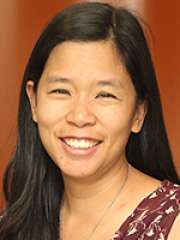
Jenny Shen, MD
Dr. Jenny Shen is an Assistant Professor of Medicine at UCLA. She received her M.D. from Columbia University, completed her internal medicine training at UCLA, and completed her nephrology fellowship and earned a Master’s degree in Epidemiology from Stanford University. Dr. Shen’s research focuses on assessing and improving the outcomes of patients on chronic dialysis, with a particular emphasis on health disparities and medication safety and effectiveness. Her expertise is in analyzing administrative databases (“big data”) using advanced statistical methods that minimize the bias and confounding common in observational studies. She also has an interest in qualitative research, which uncovers patient’s beliefs and perspectives that could be influencing outcomes but that are not currently captured in existing databases.
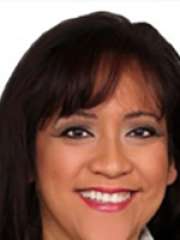
Theona Tacorda
Theona Tacorda is a Data Analyst at UCLA Clinical and Translational Science Institute (CTSI). Ms. Tacorda received a Master of Science Degree in Software Engineering from California State University, Fullerton, and a Bachelor of Science Degree in Computer Science from DePaul University. She provisions electronic health records (EHR) and data support for research purposes and provides technical solutions for the optimization of data retrieval, focusing on accuracy and consistency of data delivery.

Lindsey Kornowske, MS
Lindsey Kornowske is a data scientist with Providence Medical Research Center. She leads the design and provenance of the CURE-CKD Registry and is a core biostatistics analyst with the Consortium. In addition to partnering with CURE-CKD’s clinical investigators to study real-world populations with kidney disease, she is passionate about building innovative data infrastructure that readily leverages data from electronic health records to support the research of CURE-CKD investigators.
She brings to CURE-CKD a career-long enthusiasm for science and data visualization and a varied research background spanning inorganic chemistry, molecular diagnostics, and fermentation science. Lindsey holds a Master of Science Degree in Food Science from Washington State University, and a Bachelor of Science Degree in Chemistry from the University of Washington.
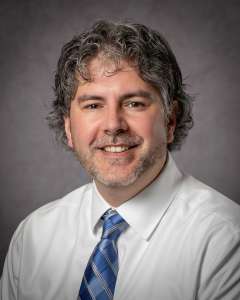
Jason Eugene Brouillard, PharmD, MBA, BCPS
Jason Brouillard is an Assistant Professor in the College of Pharmacy and Pharmaceutical Sciences at Washington State University (WSU). As a Board-Certified Pharmacotherapy Specialist, Jason is committed to connecting clinical expertise, education, and practical healthcare leadership to prepare the next generation of pharmacists for an evolving profession.
Before joining the WSU faculty and CURE-CKD, Jason held a variety of clinical and leadership positions at Providence Sacred Heart Medical Center and Holy Family Hospital in Spokane, WA including Adult Critical Care Pharmacist, Antimicrobial Stewardship, manager of an outpatient/retail pharmacy, and as a Pharmacology Lead lecturer at the University of Washington School of Medicine.
Jason's scholarly interests include pharmacy education, mental health training, and pharmacotherapy. His work has included peer-reviewed publications, pharmacotherapy text book chapters, professional presentations, and funded research examining mental health training for pharmacists and student pharmacists.
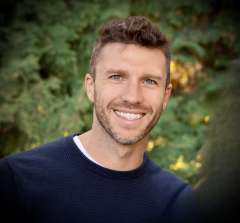
Brad Dieter, MS, PhD
Dr. Brad Dieter is a translational scientist whose research sits at the intersection of molecular biology, metabolism, and chronic disease. He earned his B.A. from Washington State University and his M.S. and Ph.D. from the University of Idaho, training as an exercise physiologist, molecular biologist, and biostatistician. He completed his postdoctoral fellowship at Providence Medical Research Center, Providence Sacred Heart Medical Center and Children's Hospital, where he studied how metabolism and inflammation drive the molecular mechanisms of diabetic complications and contributed to the discovery of novel therapeutics for diabetic kidney disease. \His work spans the full translational pipeline, from basic science and human clinical trials to machine learning applications in large health datasets.
Dr. Dieter has built a career translating that research into real-world impact. Across a series of executive roles, including Chief Scientific Officer, Chief Operating Officer, and Chief Executive Officer, he has led the work of turning scientific findings into products, companies, and clinical tools that reach patients directly. He remains active on scientific advisory boards focused on closing the gap between research and practice in chronic disease, including chronic kidney disease.