Symptoms and Causes
Symptoms
Kidneys
- Microscopic hematuria: blood not directly visible in urine, but red blood cells present upon microscopic inspection. Earliest and most common symptom
- Proteinuria: abnormal amounts of protein in urine
- Abnormal urine color
- Blood in urine that is visible during a cold or flu or exercise
- Flank pain: pain between the upper abdomen and back, on one side of the body
- Hypertension: high blood pressure
- Edema: swelling near the eyes and in the lower extremities
- Fatigue
- Poor appetite
- Excessive thirst
Ears
- Hearing loss in both ears
- Common in males with X-linked inheritance by early teenage years
- With autosomal recessive inheritance, boys and girls have hearing loss during childhood
- With autosomal dominant inheritance, hearing loss occurs later in life
- Hearing loss usually occurs before kidney failure
Eyes
- In those with X-linked Alport syndrome and autosomal recessive Alport syndrome:
- Abnormal shape of the lens, which can lead to a slow decline in vision as well as cataracts
- Corneal erosion in which there is damage to the outer layer of the covering of the eyeball
- Pain
- Itching
- Redness of the eye
- Blurred vision
- Dot-and-fleck Retinopathy (abnormal coloring of the retina)
- Macular hole in which there is thinning or a break in the macula
- Blurred or distorted central vision
Symptoms may vary among individuals depending on gender, age, and mode of inheritance for Alport syndrome.
Causes: Genetics
Alport syndrome is a genetic disorder caused by mutations in the COL4A3, COL4A4, or COL4A5 genes. When functioning normally, these genes code for collagen IV, which is essential for the structure and function of the basement membrane in the glomeruli of the kidney, cochlea, and eye.
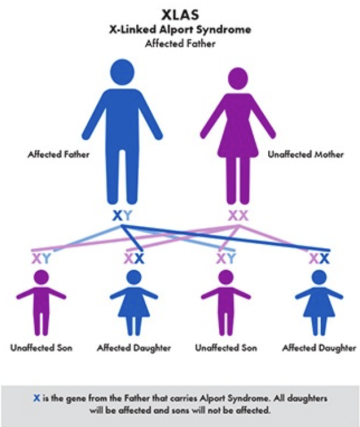
All males who develop Alport syndrome in an X-linked manner develop proteinuria and, eventually, progressive renal insufficiency, which leads to ESRD. Overall, an estimated 60% reach ESRD by age 30, and 90% by age 40. There is much more variability in the female population with symptoms ranging from isolated hematuria (the presence of blood in the urine without any other abnormalities or other signs of kidney problems) to ESRD. Approximately, 12% of females with X-linked Alport syndrome develop ESRD before age 40, increasing to 30% by age 60 and 40% by age 80. Because the disorder is X-linked, females who inherit one mutated and one normal X chromosome will have a mix of cells—some expressing the mutated gene and others expressing the functional gene. As a result, disease severity in females can vary, depending on the proportion of cells in which the mutated X chromosome is active.
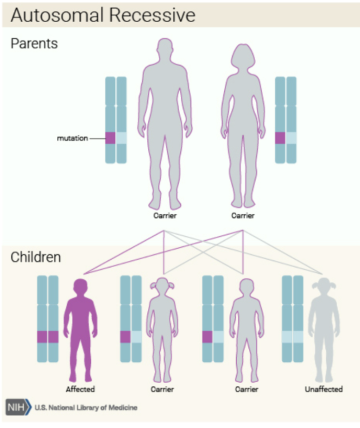
In about 15% of cases, Alport syndrome is inherited in an autosomal recessive pattern. The parents of an individual with the autosomal recessive form of this condition each have one copy of the altered gene and are called carriers. Some carriers are unaffected, while others develop a less severe condition called thin basement membrane nephropathy, which is characterized by hematuria.
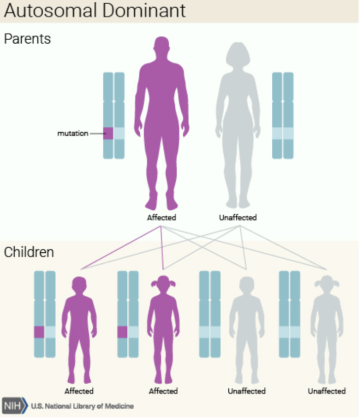
Alport syndrome is inherited in an autosomal dominant pattern in about 5%. With this inheritance pattern, there is typically a delay in the development of ESRD until middle age.