
Diagnosis and Condition Management
Affected Populations
Alport syndrome impacts all races and ethnic populations as well as both males and females. Alport syndrome is categorized as a rare disease, affecting 30,000-60,000 people in the United States and approximately 1 out of every 50,000 newborns.
Diagnosis
Alport syndrome can be diagnosed by a healthcare professional through various methods of testing. A urine test may be conducted to determine if blood and/or protein is present in the urine, hearing tests and vision tests can indicate any abnormalities in vision or hearing, and a genetic test can confirm whether one has Alport syndrome and determine its mode of inheritance. A kidney biopsy may be performed as well. Laboratory blood testing may be conducted to measure levels of waste and protein in the blood, and to determine one’s glomerular filtration rate (GFR).
Therapies, Treatment, and Management
There are currently no specific and approved therapies for Alport syndrome, but clinical trials are underway. The standard of care currently is symptomatic management alongside traditional CKD-management methods to decrease the rate of decline in kidney function.
Since Alport syndrome is linked to CKD, measures can be taken to control CKD. These include ACEi (ACE inhibitors) and ARBs (Angiotensin II receptor blockers), which both help delay the progression of CKD and control hypertension. Just like Alport syndrome, CKD tends to be a silent disease, so early diagnosis is critical.
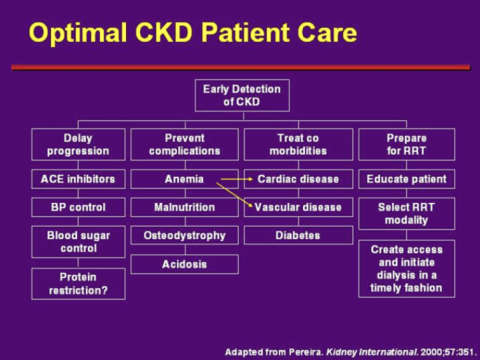
The figure above shows optimal care for a CKD patient. ACEi and ARBs help delay the progression of CKD. Other measures to slow the progression of Alport syndrome include the use of diuretics and dietary modifications to decrease sodium intake. Dialysis or a kidney transplant may be necessary if kidney failure occurs as a result of Alport syndrome.