Program
Resident Continuity Clinics: Our two unique continuity clinics
Special Interest Tracks: Our areas of concentration for those with specialized interest
Community Medicine Curricula and Opportunities: Various community medicine opportunities across LA County.
FM Bridging The Gap Pipeline/Pathways Mentoring Program: Local Van Nuys High Schools
Research and Practice Improvement Mentoring: Access to a large faculty groups with diverse expertise
Salary & Benefits: The benefits of working for UCLA
Continuity Clinics
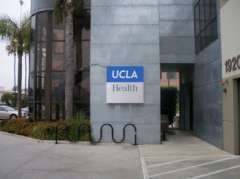
UCLA Health Family Health Center - 1920 Colorado Ave., Santa Monica, CA, 90404
The UCLA Family Health Center is located in Santa Monica, 8 blocks from Santa Monica/UCLA Hospital. Opened as a new facility in April 2000, this spacious 30-exam room facility serves a socio-economically and ethnically diverse population of working families, university employees, the local community, as well as families on Medicaid (MediCal) and LA Care.
The center is equipped with a physician CLIA lab and teaching conference rooms. We perform onsite women’s health procedures including colposcopy, endometrial biopsies, and IUD and placement, routine dermatological procedures, sports medicine procedures including knee injections and trigger finger injections, and more. Extensive diagnostic testing is provided at the nearby Santa Monica Hospital. The Family Health Center is fully connected to the UCLA network and teaching hospitals and uses Epic as its EMR.
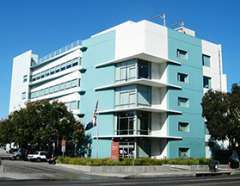
Mid Valley Family Health Center, Los Angeles County - 7515 Van Nuys Blvd., Van Nuys, CA 91405
The Mid Valley Family Health Center occupies the 4th floor of the new state-of-the-art 52,000 square foot Mid-Valley Comprehensive Health Center. It serves a diverse population of low-income immigrant and working class families of which up to 70% lack public or private insurance. Patients without insurance are billed on a sliding scale. No patients are turned away for financial reasons.
In addition to Family Medicine services, on-site consultation is available with cardiology, ophthalmology, and mental health. Further, the Center offers dental care, radiology, ultrasound, mammography, laboratory services and a complete pharmacy. We perform a complete array of procedures on site, including colposcopy, endometrial biopsies, IUD and Implanon placement and skin biopsies. Referrals are made to Olive View/UCLA for more extensive consultations. The Family Center is connected to the Internet and the UCLA network.
Inpatient Service at UCLA Santa Monica Medical Center
UCLA Santa Monica Medical Center serves as the primary home for inpatient training in the UCLA Family Medicine Residency Program. Located just a few blocks from our continuity clinic at the UCLA Family Health Center on Colorado Avenue, the hospital provides an ideal setting for residents to care for many of the same patients across outpatient and inpatient settings. Residents train on the Family Medicine inpatient service at Santa Monica (community hospital) rather than at Ronald Reagan UCLA Medical Center (tertiary referral center), providing a distinct community hospital experience closely connected to the patients and practices of Family Medicine. Our inpatient medicine service is in Santa Monica.
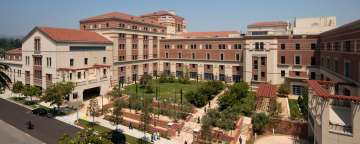
Santa Monica offers the feel of a community hospital within the resources of the UCLA Health system. Family Medicine residents and faculty care for a broad range of hospitalized patients, including patients admitted from the UCLA Family Health Center and Venice Family Clinic, as well as patients who are uninsured or experiencing homelessness. This allows residents to care for patients across care settings and better understand the clinical and social factors that shape their health.
Residents take an active role in the care of acutely ill patients and participate in rapid responses and other urgent inpatient evaluations. The experience emphasizes comprehensive inpatient medicine, care transitions, interdisciplinary teamwork, and coordination with outpatient clinicians and community-based services.
Special Interest Tracks
Reproductive Health Track
The Reproductive Health Track's goal is to provide education, training, and a deeper exposure to women's health endeavors that surpass the required core education during residency. Residents will develop a strong foundation in reproductive health as well as dealing with complex psychosocial barriers common and specific to women. This is done through multiple mediums including workshops, lectures, and specialized clinical rotations. Topics such as IUD placement, colposcopy techniques, sexual/domestic violence victims, and abortion care are covered.
LGBTQ+ Health Track
The mission of this track is to provide culturally and medically competent care to LGBTQ+ patients who have historically been marginalized within the field of medicine. This includes monthly didactics, opportunities for elective rotations, community engagement/advocacy, and a longitudinal gender health clinical rotation. All residents are welcome and encouraged to participate in any of these learning opportunities! There is also an opportunity to receive a certificate at graduation for those who have completed formal requirements. The longitudinal gender health clinic requires additional planning and scheduling.
Global Health Track
The Global Health Track's goal is to help residents gain a better understanding of healthcare both at home and abroad. Residents will learn about socioeconomic, political, cultural, and environmental factors that affect health and the delivery of healthcare. We have a series of conference that we offer every month where residents will also have the opportunity to get more hands-on training in skills that are useful for underserved areas. This includes splinting and bedside ultrasounds. As part of the track, residents have the opportunity to participate in a global health international or underserved rotation where they can put their skills into practice.
Sports Medicine Track
The Sports Medicine Track provides guidance for those interested in sports medicine or pursuing a fellowship in sports medicine. The track offers opportunities to cover local high school football and participate in pre-participation physicals for UCLA and Pepperdine University. While residents don’t need to be in the track to cover games or volunteer at pre-participation physicals, the track helps facilitate opportunities.
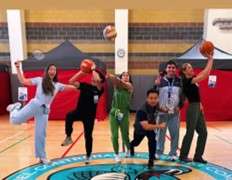
The track also gives residents access to extra ultrasound training, journal clubs, mentorship, and didactics. Track members must also complete research, and the faculty is enthusiastic about getting residents involved in their research or helping residents develop their own projects. Participants are encouraged to attend AMSSM conferences and present cases or research. Many Sports Medicine Track participants go on to pursue a Sports Medicine Fellowship, including at our own program at UCLA.
Community Medicine Curriculum
UCLA Family Medicine offers extensive opportunities for residents interested in community medicine, health equity, and caring for medically underserved populations. While there is not currently a formal Community Medicine Track, residents can build a robust community medicine experience through clinical rotations, electives, mentorship, scholarship, and community-based activities throughout residency.
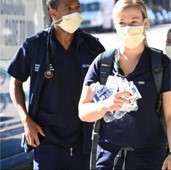
Residents train at the Mid-Valley Family Health Center, a Los Angeles County safety-net clinic serving a diverse population of low-income, immigrant, and working-class families, many of whom are uninsured. Additional opportunities include experiences in street medicine, care for people experiencing homelessness, community health fairs, community garden, mentoring high school students, environmental justice, addiction medicine, and community-engaged health initiatives across UCLA and Los Angeles.
Residents interested in community medicine can also work with faculty whose clinical, research, and advocacy efforts focus on health disparities, underserved communities, social drivers of health, and improving access to care. Opportunities are available for mentorship and scholarly projects focused on community health and health equity.
Our faculty often serve as advisors and consistently volunteer at key community outreach events, including the UCLA LMSA Lennox Health Fair and the La Cosecha Health Fairs supporting farmworkers in Oxnard.
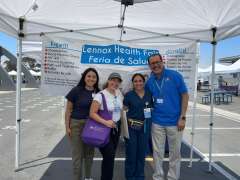
For residents seeking advanced training after residency, the Department of Family Medicine also offers a Community Medicine Fellowship, providing an additional pathway for physicians committed to careers serving communities with limited access to care.
Climate Health & Environmental Justice Leadership: Dr. Amanda D'Almeida joined the faculty to oversee medical student and resident education in climate health and environmental justice. Her interactive curriculum empowers residents to pursue advocacy initiatives including via social media channels and the California Academy of Family Physicians (CAFP).
Family Medicine "Bridging the Gap" Community Mentoring Program
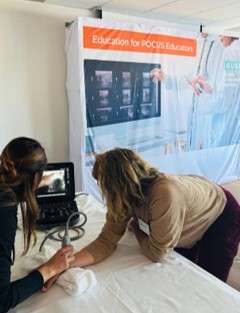
Our UCLA Family Medicine Residency program partners with local high schools in the communities we serve (at local Van Nuys High Schools) to bring role models and medical education to high school students. Open to all high school students interested in healthcare careers, the program’s ultimate goal is to develop future leaders in healthcare. We aim to build interest in the field of medicine and provide skill-building experiences that will help promote matriculation and retention in higher education and health sciences.
UCLA Family Medicine residents participate in the Bridging the Gap Pathway Program, a community-partnered K–12 initiative designed to support students from under-resourced communities on pathways toward college and health professions careers. Residents serve as mentors and role models and participate in educational activities that promote academic preparation, suturing workshops, POCUS workshops, health career exploration, and a more diverse future health care workforce. Read about the program here. The program is co-directed by Drs. Ann Marie Hernandez and Spencer McCaffrey.
Research, Scholarship and Practice Improvement Curriculum
We are a program embedded in an academic department with a longstanding national reputation for excellence in primary care research and scholarship. Our faculty bring expertise across a broad range of primary care research areas, including health disparities, community-engaged research, implementation science, health services research, medical education, addiction medicine, population health, aging, primary care sports medicine, and practice improvement.
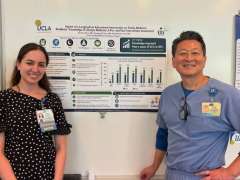
The residency curriculum includes formal faculty mentorship to support each resident in completing their scholarly requirement. Residents may participate in ongoing faculty research, develop their own scholarly projects, and receive guidance in research methods, quality improvement, dissemination, and presentation. All residents present their scholarly work at the Department of Family Medicine’s Annual Research Day, which brings together residents, faculty, students, and other members of the department’s academic community. Practice improvement is also an important part of resident education.
In 1984, the department established the inaugural UCLA Family Medicine Multi-Campus Research Day, creating a vital scholarly forum to showcase innovative research by residents, fellows, faculty, staff, and medical students across affiliated training sites. Designed to advance primary care delivery and health equity through cross-institutional collaboration, this signature annual event brings over 200 people together every year and has flourished for over four decades, marking its 42nd annual gathering on May 27, 2026.
Research and Scholarly Highlights: Residents have opportunities to collaborate with experienced faculty investigators, participate in projects across a wide range of primary care topics, learn research and evaluation methods, present at local and national meetings, and work toward peer-reviewed publication. We encourage prospective and current residents to explore our faculty research profiles to identify areas of shared interest and potential mentors.
Practice Improvement Highlights: Residents also receive hands-on training in quality and practice improvement. They learn practical improvement methods, including the Plan-Do-Study-Act (PDSA) cycle, and apply these approaches to real clinical and operational challenges. Rather than simply learning quality improvement concepts in the classroom, residents actively participate in efforts to improve care delivery, patient outcomes, clinical workflows, and the systems in which they practice. Our faculty have expertise in quality improvement, implementation, and practice transformation, and residents play an active role in identifying opportunities to improve clinical care, developing and evaluating interventions, and participating in efforts to strengthen the systems in which they practice.
We encourage prospective and current residents to explore the scholarship and research profiles of our faculty to learn more about their areas of expertise, ongoing projects, and opportunities for mentorship and collaboration.
Salary & Benefits
The benefits and salary for Family Medicine residents are in accordance with University of California policies. Please visit the UCLA School of Medicine Graduate Medical Education (GME) Medical Resident Salary & Benefits for up-to-date information.