For most of her 34 years, Bre Klein had no idea she was walking around with a ticking time bomb in her chest.
As far back as she can remember, Klein suffered from random symptoms that included feeling disoriented and seeing spots that clouded her vision. As the years passed, she began to experience crippling fatigue, a racing heart, nausea, shortness of breath, heart palpitations and shooting pain in her jaw.
At times, her limbs would go numb.
“Just even walking to the kitchen, I became exhausted, dizzy and lightheaded,” Klein recalls.
As she entered adulthood, her symptoms started to occur almost daily. Visits to local hospitals yielded no definitive answers. Her doctors suggested her symptoms might be associated with anxiety and panic attacks
Multiple cardiologists diagnosed her with dysautonomia – a term used to describe any disorder of the autonomic nervous system – as well as Postural Orthostatic Tachycardia Syndrome (POTS), a form of dysautonomia in which standing causes an excessive heart rate increase. But the underlying issue remained a mystery.
“I wore a Holter monitor (to record heartbeat), and it showed my heart rate went from the 30s and 40s to 140 while I was asleep,” says Klein, who is now a nurse. “And I'm like, that's weird. I'm not even working out. And look how much it's fluctuating.”
She was instructed to do strength-training exercises, to increase her salt intake and to wear compression socks. Still, her symptoms persisted.
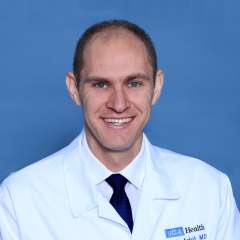
It wasn’t until she transferred her care to Boris Arbit, MD, a cardiologist at UCLA Health’s Encino Specialty Care, she says, that she received an accurate – and alarming – diagnosis: anomalous coronary artery (ACA).
Rare and dangerous
ACA is a rare and potentially serious congenital condition that impacts blood flow to the heart, which can cause sudden cardiac arrest. It arises when one of the two coronary arteries that supply blood to the heart is in the wrong place – for example, when a right coronary artery originates from the left side of the aorta.
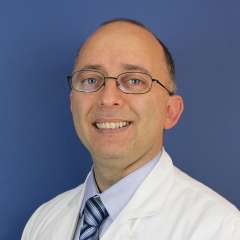
“(The blood) still needs to go to the right side, but because it started in the left, it has to take this extra journey to get where it needs to go,” says Gentian Lluri, MD, PhD, a UCLA Health cardiologist who specializes in treating adult congenital heart disease. “And because of that extra trip, in the vast majority of cases, there is the risk of obstruction or narrowing of this vessel, which could lead to the reduction of the blood flow to the coronary artery.”
Anomalous left coronary arteries are typically high-risk, Dr. Lluri says, whereas anomalous right coronary arteries generally carry lower risk, although that can vary.
According to the 2025 American Heart Association/American College of Cardiology’s statement on competitive sports, sudden cardiac arrest in athletes under age 35 is a known risk linked to certain types of anomalous coronary arteries because the narrowing of the vessel triggers reduced coronary blood flow and potentially fatal heart rhythms.
“Even in people who do not participate in high-intensity sports, there is always a concern of sudden cardiac death, which could be caused because of the reduction of the blood flow through this anomalous coronary artery,” Dr. Lluri explains. “It could lead to a ventricular arrhythmia that can be deadly.”
ACA is prevalent in about 0.2% to 1% of the population, with the exact figure depending on the study population and imaging modality used, he adds, and there could be an increased risk of congenital heart defects in children of affected parents.
Difficult to diagnose
Though Klein had experienced symptoms since childhood, many patients with ACA are asymptomatic until they have a sudden cardiac event, Dr. Lluri says. Symptoms, when they do occur, may include unexplained chest pain, shortness of breath with activity, palpations and fainting.
Routine tests such as X-rays and ultrasounds do not detect ACA in adults; specialized scans such as cardiac CT or catheterization – which carry some risk – are required for a diagnosis.
“There are some concerns that do come with such testing, so we have to have a high degree of suspicion (of ACA),” Dr. Lluri says. “If we don't look for it, we don't find it.”
Finding answers
When Klein moved from San Diego to L.A. in 2024, it was partly because she felt her medical care would improve, she says. Once she arrived, Dr. Arbit ordered a stress test. Then, Klein asked Dr. Arbit: Why do I get the hard, squeezing pain in the middle of my chest?
“I really wanted to emphasize that,” she said. “I've told doctors before, but this is a new doctor, so I figured, why not give it a shot?”
That question prompted Dr. Arbit to order a CT angiogram – a test that uses a contrast dye to check for blockages and other problems in the arteries – which Klein took two weeks later, resulting in the ACA diagnosis.
“It was me advocating and him listening,” Klein says. “I might not be here without that.”
Multidisciplinary approach
Klein asked for and received a referral to Dr. Llurie. Based on her results from the angiogram, he confirmed the need for catheterization, a procedure in which a tube is inserted into a blood vessel through the arm or groin. This allows the physician to look at structural issues within the coronary arteries.
“It's not a test that we order in all patients, but we wanted to make sure that there was indeed an obstruction,” Dr. Lluri explains.
Catheterization confirmed Klein had a right anomalous coronary artery as well as severe ischemia, which was reducing the blood flow to her heart. After one of the weekly Adult Congenital Heart Disease review meetings – in which a team of cardiologists, surgeons, anesthesiologists and nurses discusses complex cases – surgery was scheduled.
“We literally review every piece of evidence that we have gathered and ask questions and go over the studies in detail to come up with the best scientifically honest recommendation," Dr. Llurie says. "And once that is made, I reach out to the patient and update them on the consensus of what the recommendations are. And then if surgery is recommended, we arrange for a surgical consult to go over the surgery.”
Klein says she appreciated Dr. Llurie’s patience and willingness to answer her questions. “He was really good at calling me and updating me. I had so many questions, all the time,” she says.
After years of being told her symptoms were psychiatric, Klein says, she finally felt validated.
“I've had so much self-doubt, like, oh, maybe all these people that are telling me I'm crazy are right,” she says. “Like, maybe I am just a hypochondriac. And 99% of the time, it's been something physical.”
The road to recovery
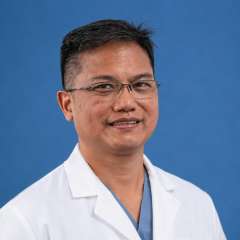
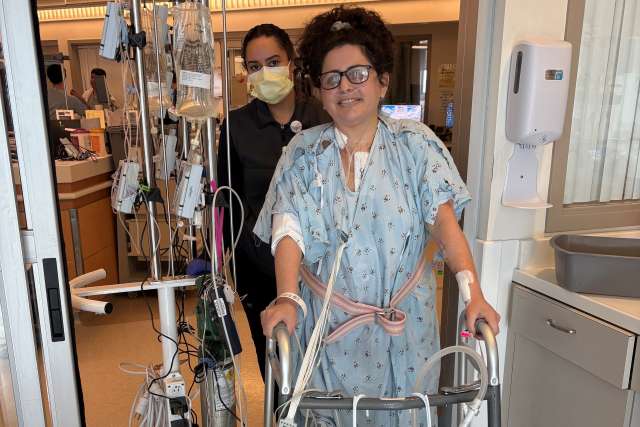
On April 28, 2026, Klein underwent open heart surgery, performed at Ronald Reagan UCLA Medical Center by Ming-Sing Si, MD. The procedure lasted about five hours, with two hours on bypass. Post-surgery, she experienced some pain, particularly from chest tubes and pacer wires, but she graduated from ICU on day two and has seen gradual improvements ever since.
After the surgery, Klein says, Dr. Si explained that her body’s production of collateral circulation – tiny blood vessels that can take over when an artery is blocked – probably kept her alive.
“He couldn’t find any on the outside of my heart during surgery or on the angiogram so they must be in the inside of my heart,” she says.

Klein is now undergoing cardiac rehabilitation twice weekly. She is showing “remarkable recovery,” Dr. Lluri says.
“I have an amazing exercise physiologist, and he really keeps an eye on everything. And I've been progressing, which is great,” Klein says.
She notes that since surgery and two iron infusions she advocated for due to her low hemoglobin level, her dysautonomia and POTS have improved significantly. She’s now looking forward to soon resuming the activities she loves, symptom-free: Pilates, strength training and long-distance running.
Klein praises the care she received from her physicians at UCLA Health.
“Dr. Arbit and Dr. Si were both fantastic at accommodating my other conditions at the same time as my ACA, and so was Dr. Lluri,” Klein says. “He was very much on top of everything and very responsive and restored some hope in the healthcare system as a patient.”
Never give up
Klein says the experience has taught her the importance of listening to your body and advocating for yourself. That’s especially true for women, she adds, for whom heart disease is the No. 1 cause of death.
“If a doctor doesn't hear you, you can see another,” Klein says. “You know your body better than anyone. I want people to know that and to not give up on trying to find an answer, because I'm 34, and I just found all this out.”