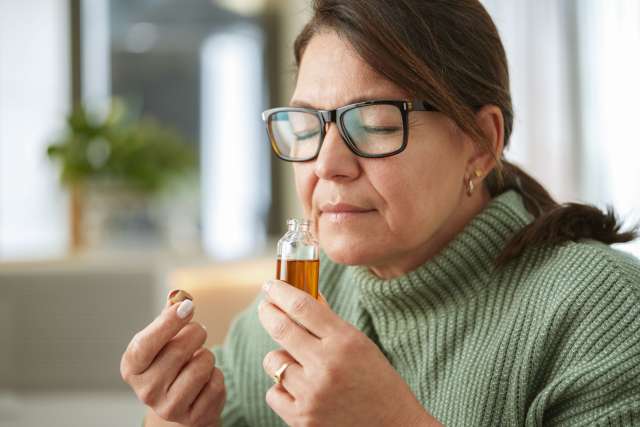
It’s no secret that as you get older, lots of things change. And just like your eyesight may have changed to the point where you now need glasses, your sense of smell may diminish too.
A reduced sense of smell is quite common, and it can start even as early as your 40s. One study found that 23% of those older than 50 reported changes to their sense of smell. And for those over 80, that percentage jumped to 32%.
A diminished sense of smell isn’t just an annoyance. It can also affect your sense of taste and even pose a danger at times.
How does our sense of smell work?
The inside of your nose contains patches of olfactory sensory neurons. These specialized cells detect scent molecules and then send signals to your brain. Your brain identifies the smell, and then you perceive it as either a good or bad scent.
With age, those olfactory nerves become less effective at their job. Your nose doesn’t process smells as well and your brain doesn’t get the message that you’re smelling something.
As you get older, the mucous membranes that line the inside of the nose can also get drier. Less moisture means that scent molecules aren’t as easily trapped and held in the nose long enough for your olfactory nerves to do their thing.
What causes loss of smell?
Sense of smell can naturally diminish with age. But getting older isn’t the only thing that can affect your ability to sniff out scents.
Other factors that can affect your sense of smell include:
- Allergies
- Cold, flu or sinus infection
- COVID-19
- Medications (including some antibiotics)
- Nasal polyps
- Neurological conditions (such as Alzheimer’s disease, multiple sclerosis and Parkinson’s disease)
- Traumatic brain injury
The dangers of losing your sense of smell
A reduced sense of smell can be a blessing in some situations (such as dealing with stinky laundry or cleaning up after a pet). But in others, it can be anything from annoying to downright dangerous.
Smells can be an important warning that something’s unsafe. Smoke, a gas leak, spoiled food or toxic chemicals all give off unpleasant smells. When you can’t smell them, you’re at higher risk of illness or injury.
Your sense of smell is also closely linked to your sense of taste. When one is diminished, so is the other. Not being able to smell and taste your food can take away much of the enjoyment around eating. For older adults, this can sometimes lead to lower appetite and less desire to eat.
When to see a doctor about losing sense of smell
If you suspect your reduced sense of smell is related to an underlying health issue, it’s important to talk to your doctor. In some cases, treating the issue can help restore a better sense of smell.
And even if you’re losing your sense of smell purely due to age, it’s still worth mentioning at your next doctor visit. It’s important for your doctor to know about any new or worsening symptoms you are experiencing.
While there’s no treatment for loss of smell related to aging, you can take steps to stay safer as your smell diminishes. Make sure your home’s smoke detectors are up to date, label foods with dates so you know when they’ve likely gone bad and keep rooms well ventilated when using chemical solvents or cleaners.