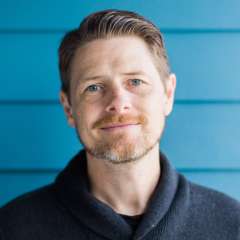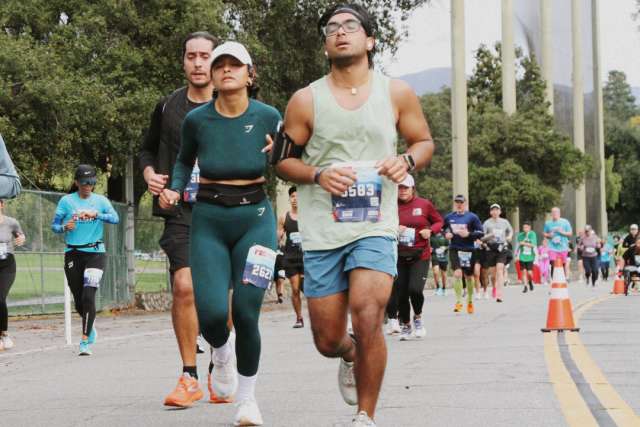
Russell Ahmed will be running his first marathon – the ASICS Los Angeles Marathon – on March 8, one eye on the road in front of him and the other on scientific research that changes lives around the world.
Ahmed, 22, graduated from UCLA in June with a BS in neuroscience. Since his freshman year, he had worked as an undergraduate research assistant in the lab of Scott Wilke, MD, PhD, studying the brain’s circuitry and how it is disrupted in psychiatric disorders.
In his senior year, Ahmed was awarded a fellowship under UCLA’s Undergraduate Research Scholars Program. Ahmed was in line to be hired at the lab for a two-year stint before entering an MD-PhD program in 2027, but due to funding freezes he instead worked as an unpaid volunteer for three months. He was then hired by the Wilke lab as a research technician to work with Michael Gongwer, a trainee in UCLA’s Medical Scientist Training Program in the lab of Laura DeNardo, PhD.
The experience and the hurdles stuck with Ahmed, so when it came time to consider running the LA Marathon, he decided to use the opportunity to raise awareness about the importance of critical scientific research. At the same time, he would raise money for event host The McCourt Foundation, which supports research into the cure of neurological diseases.
Ahmed has set out to raise $675 for the McCourt Foundation and, as part of his efforts, was featured in an LA Marathon Instagram post on Giving Tuesday in November.
“I figured fundraising for The McCourt Foundation, while it did not directly address research funding crises here at UCLA, it was a way for me to fight back,” Ahmed said. “It’s just the fact I’m even able to raise awareness even if it doesn’t result in any amount of money. Just spreading awareness that there is lifesaving research, to protect this pursuit to understand diseases and come up with new ways to treat them.”
TMS research
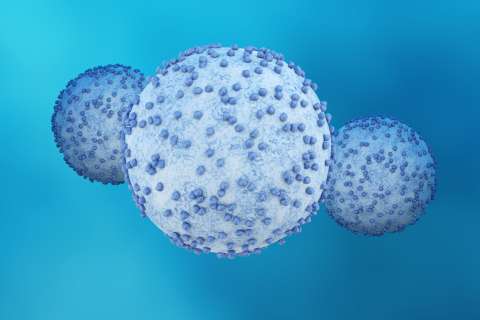
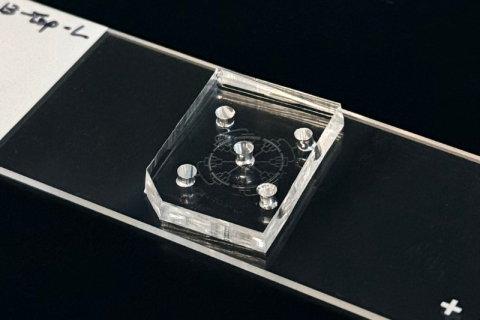
Ahmed’s preclinical research focuses on prefrontal microcircuit plasticity and the antidepressant benefits of repetitive transcranial stimulation (TMS), a noninvasive procedure.
“TMS is an innovative and cool treatment for treatment-resistant depression – but the roadblock has been getting a better understanding into how it works,” he said. “It’s clearly proven to be effective in long-lasting ways for some people, but it doesn’t work for all people.”
With TMS, electromagnets placed on the head send out targeted magnetic waves to induce plasticity in neural circuits, leading to antidepressant effects. TMS was approved by the Food and Drug Administration in 2008 for the treatment of major depressive disorder and has since been found effective in treating obsessive compulsive disorder (OCD) and other conditions.
Ahmed said his attraction to the Wilke Lab for brain research was twofold.
“On the one hand, I was very interested in neuroscience coming into college,” he said. “Also, in my family, both my mom and brother are clinically diagnosed with major depressive disorder. Marry those two life experiences and I was interested in trying to investigate novel treatments, treatments that are less problematic because there are less side effects.”
First-time marathoner
Running keeps Ahmed centered as he pursues this challenging work. He has completed two half-marathons, including The McCourt Foundation’s Rose Bowl Half Marathon in 2024.
Ahmed’s background, however, is not in running, but in golfing, including his time on the Columbus Academy’s four-time state champion high school golf team in Ohio.
“Once that aspect of my life wasn’t as pronounced, I was looking for something similar,” Ahmed said. “With golf there’s a lot of repetition, you get into some kind of flow state. I found the biggest parallel was running, so I started jogging around the campus loop. I’m a big music lover, too, so I’d pop in my headphones and going on a jog was therapeutic for me.
“It’s a cool hobby,” he said. “I’ve been using it to keep me grounded. There’s so much stuff going on at UCLA and in the health care world and in the science world. It keeps me sane.”
Pairing running with the chance to raise awareness and funds for research makes it all the more satisfying.
“Something that’s shared across labs at UCLA is the desire for a better understanding of the natural world. Those new layers of understanding can be translated to help humanity and society in some fundamental way,” Ahmed said.
“This past summer I was witnessing all the shifting circumstances in scientific research and saw how powerless I was,” he said. “I wanted to do something to shift that.”