For Kara Torrez, resilience is the art of turning adversity into creativity.
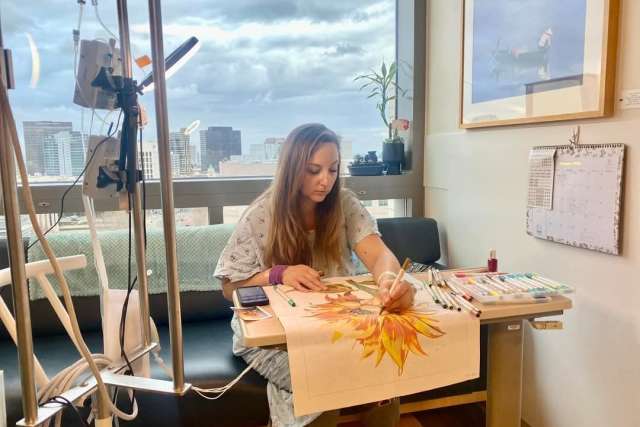
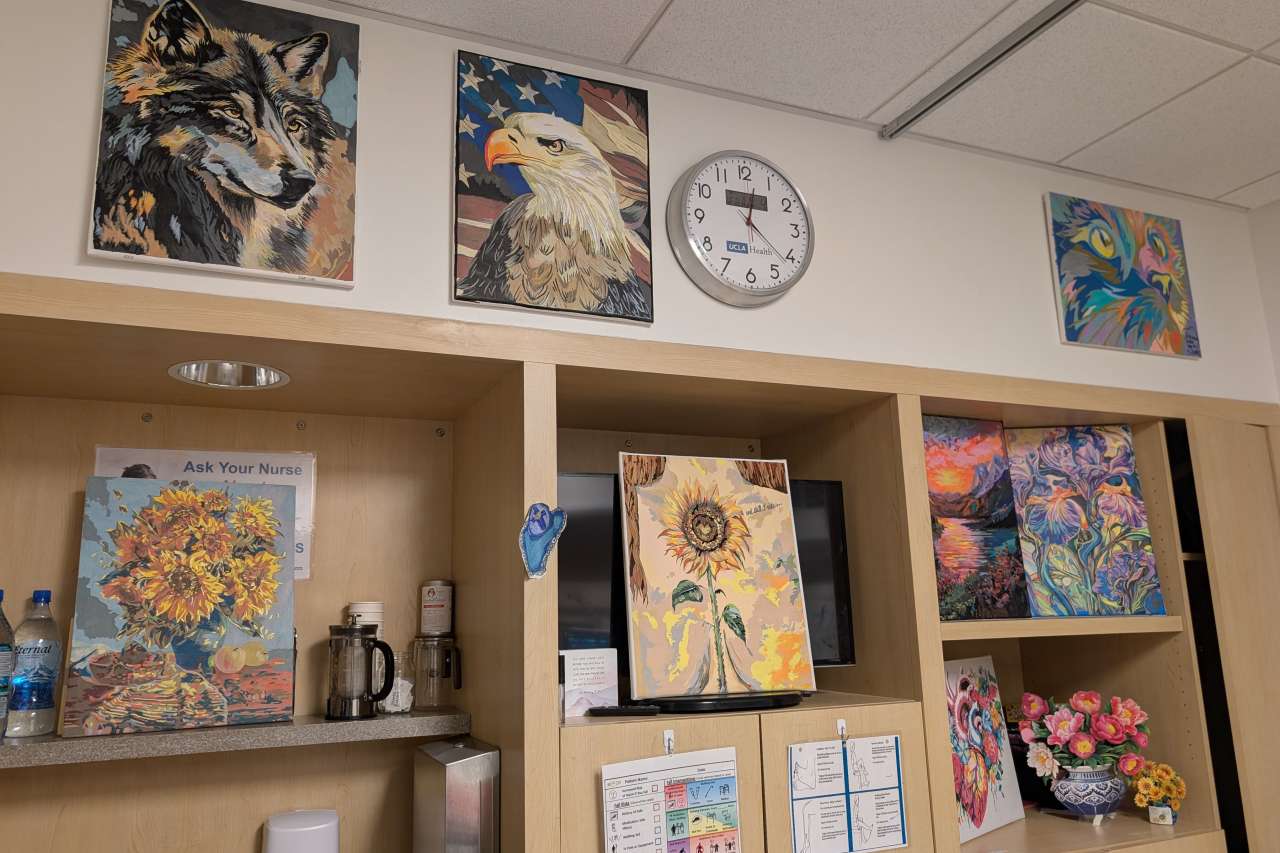
As she prepared for a life-saving heart transplant at UCLA Health in 2025, Torrez transformed her hospital room into a vibrant art gallery.
Bright canvases lined the walls. Floral paintings softened the room. And bold strokes of color became daily reminders that even in hardship, she could overcome anything.
Born with d-transposition of the great arteries (d-TGA) — a rare congenital heart defect in which the heart’s two main arteries are reversed — Torrez has spent four decades navigating complex cardiac surgeries and specialized care. Facing yet another major operation, painting became her way of redefining uncertainty.
“At that time, I was really just trying to process all of my emotions,” Torrez says. “I knew I was facing another major surgery, and it was a very traumatic time in my life. But I also tried to look for the beauty in everything.”
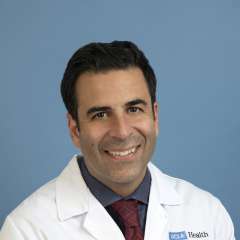
Jamil Aboulhosn, MD, who oversaw her first four years at UCLA Health, describes her as an exceptional patient.
“Despite facing adversity and eventually needing a heart transplant, Kara always brought a positive attitude,” says Dr. Aboulhosn, director of the Ahmanson/UCLA Adult Congenital Heart Disease Center. “She truly exemplifies the kind of patient that is a pleasure to work with.”
A rare diagnosis
When Torrez and her identical twin sister were born on March 8, 1985, their family quickly learned of the diagnosis that would shape the course of her life.
While her sister was born with a healthy heart, Torrez needed lifesaving treatment. Within hours, doctors performed an emergency balloon catheterization, guiding a thin tube with a tiny balloon to create a small opening in her heart.
In September 1985, at just six months old, Torrez underwent an open-heart surgery — a procedure known as the Senning operation — which redirects blood flow for infants born with d-TGA.
“This is a condition that would be incompatible with life without early intervention,” says Dr. Aboulhosn. “In Kara’s case, the Senning procedure was widely used to treat infants from the late 1950s until the 1980s, before being replaced by the arterial switch operation. Patients like Kara are a snapshot of history, who underwent these earlier procedures and are now entering their 40s and 50s.”
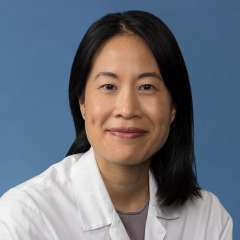
Many of these patients now face long-term complications, including heart rhythm issues, right ventricular failure, valve problems, and, in some cases, the need for a transplant, says Jeannette Lin, MD, who directs the UCLA Health ACHD (Adult Congenital Heart Disease) Fellowship program and first oversaw Kara’s care in 2017.
Today, d-TGA accounts for approximately 3% of all congenital heart detects.
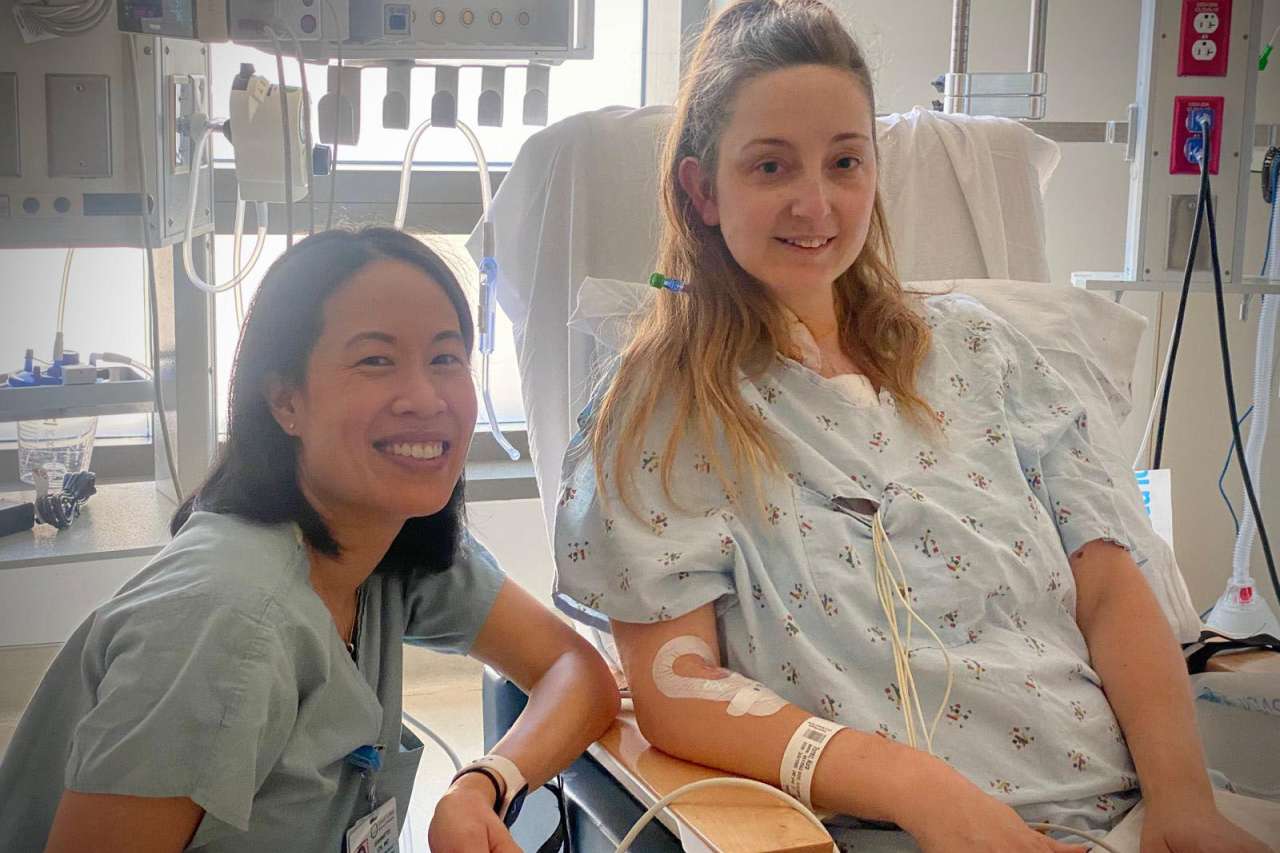
“Much of my early childhood was marked by cardiology appointments, X-rays, stress tests and imaging to monitor my heart growth and function,” says Torrez. “I was basically raised my whole life to understand my limits and still try to do everything that my sister could do.”
In high school, Torrez endured another surgery to remove multiple metal sternal wires from her infancy surgery. It was then, she says, that she began to fully grasp the reality of her condition. When she temporarily relocated to New Jersey at age 19, that awareness deepened.
“I realized my cardiologists, insurance needs and care team mattered — I needed to keep all the same doctors,” she says. “The following years were defined by ongoing heart care and learning how to live fully within those limits.”
Life-saving care at UCLA Health
Torrez first sought care at UCLA Health in 2013, during her first pregnancy. Over the past 13 years, she and her husband, Chris, who live in San Diego, have built a strong relationship with the UCLA Health team.
"I was actually advised not to have children because the strain of childbirth could put me into immediate heart failure," Torrez recalls. "But I understood the risks, and I was willing to take the chance. That's how I was brought to UCLA for the delivery of my first son, and the team began monitoring me throughout my pregnancy."
Torrez’s heart condition continued to evolve postpartum. After losing consciousness one day, doctors performed a specialized test to examine her heart’s electrical activity and, eight months after giving birth, she underwent a procedure to correct an abnormal heart rhythm. Years later, a small heart monitor was implanted under her skin to continue tracking irregular heartbeats.
Now a mother of two — Christopher, 12, and Liliana, 10 — Torrez says motherhood has redefined her understanding of perseverance. When worsening symptoms led to her heart transplant evaluation in 2024, her children became both her greatest motivation and support system.
“I think the scariest thing as a mother was knowing I was facing a long-term hospitalization and wondering who would care for the kids,” she says. “But the kids were really resilient. It was hard on all of us, and we made do with everything.”
Dr. Lin observed firsthand the powerful role motherhood played in Torrez’s care plan.
“She recognized that her symptoms were so limiting that she couldn’t fully participate in her children's lives,” Dr. Lin says. “In order to move forward, there needed to be a major change.”
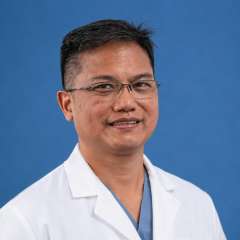
After undergoing a heart transplant in July 2025, performed by Ming-Sing Si, MD, Torrez and her family navigated recovery together, temporarily relocating near UCLA Health for her care. She even homeschooled her kids from her hospital room during the week.
“She has a wonderful support system,” says Dr. Lin. “As a family, they made extraordinary efforts to minimize disruption in their children's lives during something as huge as a heart transplant."
Dr. Aboulhosn shares the same sentiment: “People can deal with cataclysmic events. But if they have a strong internal core that includes people they love and trust — that is a really key part of the whole infrastructure that gives people resilience.”
The art of resilience
Torrez left a lasting impression on her care team and others around her in the hospital.
“One of the things that really impressed me was that while she was waiting for her transplant, she was just cranking out these canvases that were really fantastic,” says Dr. Aboulhosn, who is also an artist. “The one that sits in our office is really fascinating. It shows the silhouette of a little girl and older woman in a tree and a heart within that tree.”
Torrez explains that the painting — depicting a baby whose heart defect is corrected at birth, enabling her to build her legacy as an adult — symbolizes the congenital heart team’s exceptional technology and expertise. These resources, she says, give babies hope for a healthy future.
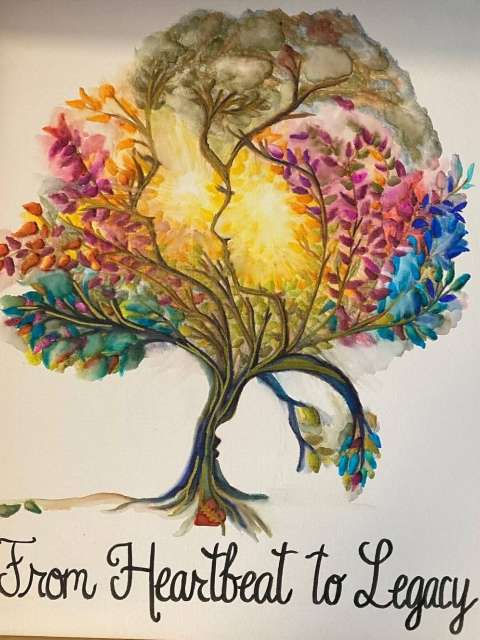
“Dr. Aboulhosn really encouraged me to start working on the hand drawing and painting,” Torrez explains. “I made the hospital room look like an art gallery because it was my way of creating something. Almost every wall was filled with paintings, and it just felt so much more cheerful.”
And when she wasn’t painting, Torrez became a source of encouragement for other transplant patients. She walked throughout the hospital hallways each day, building strength before surgery and cheering on others along the way.
“She was a really positive influence, not just on us, but also on other patients who were waiting for transplant,” says Dr. Aboulhosn. “She would start hosting people in her room for card games and created a sense of community among other patients as a natural leader.”
“My biggest thing is that you have to be strong mentally and physically,” says Torrez. “You can’t accept that you are sick and let the illness define you.”
Moving forward
Today, Torrez, who works in real estate, receives congenital heart care under the guidance of her primary transplant cardiology team, with ongoing support from the ACHD program. She travels to Westwood once a month for blood draws, echocardiograms, heart biopsies and follow-up visits with the transplant team.
“We follow our congenital heart patients and monitor them throughout the transplant evaluation process, transplant surgery and post-transplant care,” says Dr. Lin.
Torrez’s journey, she adds, reflects the strength of collaboration across specialties.
“Our partnership with the Cardio-Obstetrics Program and our Maternal Fetal Medicine colleagues made it possible for someone born with complex congenital heart disease to have two successful pregnancies,” Dr. Lin says.
That level of coordination extends across the entire care team — including physicians, nurses, nurse practitioners, physician assistants, case managers and support staff — all of whom play a critical role in guiding patients through their care plans.
“In many ways, caring for patients like this is akin to conducting a complex orchestra,” says Dr. Aboulhosn. “Our team tends to conduct this process, and it requires a lot of practice. Even the surgical transplantation itself is far more complicated in patients with congenital heart disease than in those whose hearts are built normally. Each case requires careful planning and adaptation.”
For Torrez, that expertise makes the travel between San Diego and Westwood worthwhile.
“I travel quite a distance to receive care at UCLA, but it is well worth it because the level of care I receive here is far beyond any other place,” says Torrez.