In the fall of 2025, Joncee Kohls was in Alabama helping her sister recuperate from a car crash. Over the course of her six-week stay, however, Kohls started having worrisome symptoms of her own.
“I had pain around my abdomen – right underneath my lungs,” she said. “I lost about 10 pounds during the six weeks I was there because I couldn’t eat very well.”
At first, she attributed the symptoms to a recent increase in the two medications she’d been prescribed to control her glucose levels, which had started to climb. Her primary care provider in Ventura County had doubled her dosage not long before Kohls’ trip to Alabama, and she assumed he’d adjust her medication once she returned.
At her follow-up appointment in November, however, her doctor was concerned that her recent weight loss and pain, coupled with her medication-resistant glucose levels, pointed to the possibility of pancreatic cancer. He ordered an initial scan.
“He actually called me on a Friday night about five o’clock to say they’d found a pancreatic mass,” Kohls said. “It was shocking, because I didn’t really expect it to be that. I honestly thought it was the medication that was making me sick,” she said.
During that phone call, he also told Kohls he was referring her to the local UCLA Health specialty center for further testing and monitoring.
Expedited appointments during the holidays
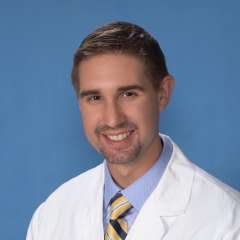
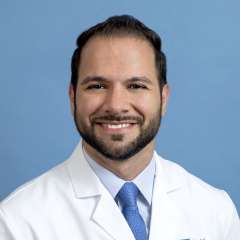
“It was an urgent referral,” recalled Adam Cavallero, MD, primary care physician and regional ambulatory medical director for the UCLA Health Department of Medicine in Ventura County. The timing was complicated by the fact that it was already the start of the busy holiday season.
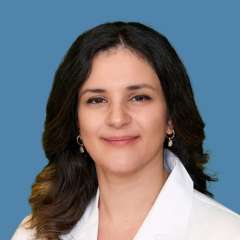
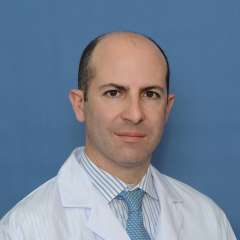
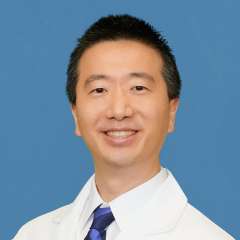
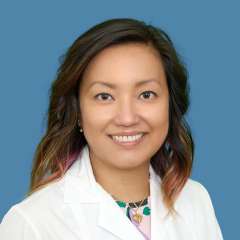
The electronic request initially went to Jeffrey Wei, MD, an endocrinologist at the UCLA Health Primary & Specialty Care Center in Ventura. With no immediate appointments available, the request was routed to Lauren Beshay, MD, an endocrinologist at UCLA Health Primary & Specialty Care in Thousand Oaks.
“The endocrinologists were messaging to try to see who could accommodate her first,” Dr. Beshay said, “and we all agreed that she should first be seen by a primary doctor who could work up the pancreatic mass.”
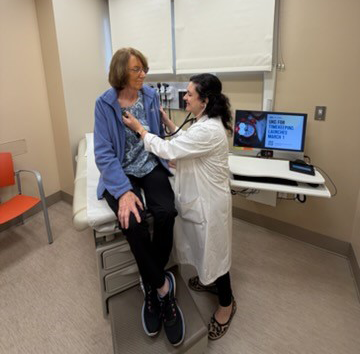
While an endocrinologist monitors glucose levels for pre-diabetic or diabetic patients, Dr. Beshay noted, pancreatic cancer would first need to be ruled out prior to making any medication adjustments.
At Kohls’ first appointment with UCLA Health on Dec. 16, she met with Dr. Cavallero, an internal medicine specialist. Though his schedule was already full, he made room to see her urgently after learning of her situation. She told him about her sister, who had been diagnosed with pancreatic cancer in 2021 and died just three weeks later.
“It was an emotional visit,” he said.
Even without a tissue-sample biopsy, which he described as the “gold standard” for making a cancer diagnosis, Cavallero thought there was a high likelihood that it was a malignancy. “I knew we had to arrange for biopsy and staging and then we could start talking about treatment,” he said. “But it needed to be done quickly.”
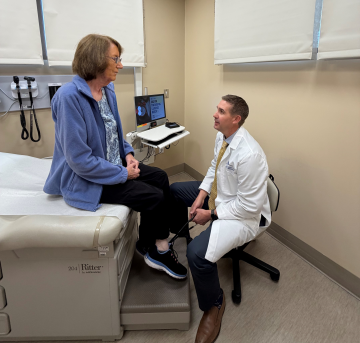
Despite the fast-approaching holidays, “people went above and beyond,” he said. “Everybody just jumped in to help – it was honestly just this amazing networking, teamwork and communication.”
Julie Huynh, MD, an oncologist in the Westlake Village Primary & Specialty Care Center, saw Kohls on Dec. 19. Three days later, Danny Issa, MD, an interventional gastroenterologist at the UCLA Health West Hills Primary & Specialty Care Center, conducted an endoscopic ultrasound biopsy.
The results showed that Kohls did indeed have pancreatic cancer, and that it had metastasized to her lungs.
Starting treatment quickly
Dr. Huynh recommended that Kohls start chemotherapy, which could take place in Westlake Village, as quickly as possible.
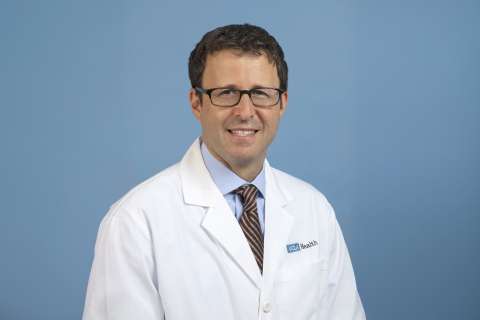
There was another potential option available, however: a trial being led by Zev Wainberg, MD, professor of medicine and surgery and co-director of GI oncology at the David Geffen School of Medicine at UCLA.
It’s one of close to a dozen cancer-specific trials underway at UCLA Health that targets the mutated KRAS protein, and one of several Dr. Wainberg is overseeing that’s specific to pancreatic cancer.
“KRAS is the dominant oncogene in all of cancer, but especially in pancreatic cancer,” said Wainberg, a member of the UCLA Health Jonsson Comprehensive Cancer Center. About 93% of pancreatic cancer patients have this mutation, he noted.
After several weeks of additional scans and testing, Kohls found out she qualified for the trial.
Promising initial results
On Feb. 3, Kohls began taking the targeted medication, which consists of three daily pills.
Just 11 days later, she was pain free. “I was curled up on the couch before, due to the pain,” she said. “I’ve had no pain pills since then.”
At her first scan, in mid-March, Kohls found out that her cancer cells had shrunk by 50%.
Not everybody responds to the medication the same way, Dr. Wainberg said, but the initial scan is often a good clue. In Kohls’ case, “her first result was very compelling,” he said. “We want to see this be more durable, and we’re optimistic that it will be.”
The medication has far fewer side effects than chemotherapy, Dr. Wainberg said, but a rash is common. Kohls has had a rash on her face and upper chest but has had no other adverse effects.
Dr. Wainberg, who is one of the principal investigators for the trial taking place at UCLA Health, is also one of the lead principal investigators for the medication in the United States. He hopes it will receive Food and Drug Administration approval for pancreatic cancer treatment within the next year.
Ongoing coordination
Kohls will continue to be seen regularly and will receive scans about every eight weeks, Dr. Wainberg said. She’ll also need to continue taking the pills daily.
Kohls also sees Dr. Beshay for ongoing glucose monitoring and medication management. She still takes one of the original glucose medications she was on, but has discontinued the other, which is contraindicated for patients with pancreatic cancer.
Since starting the trial, Kohls’ glucose levels have come down fairly quickly, said Dr. Beshay, who noted that the elevated levels were related to her pancreatic cancer rather than to diabetes. “She will probably chronically need to be seen for diabetes care, but I think it’s going to be well-controlled,” she said.
Dr. Beshay is able to monitor Kohls’ glucose levels remotely via a monitor she wears on her arm. “It has a sensor that connects to her phone, and it’s reading her blood sugar 24/7,” she said.
Kohls is also able to reach Dr. Beshay or any of her other UCLA Health providers electronically whenever needed.
With a complex patient like Kohls who’s just received a new diagnosis, coordinated care is extremely helpful, Dr. Beshay said. “Her chart is consolidated, so we can see her appointments, what’s going on with the trial, and what’s going on with everyone involved.”
Going forward, “we’ll continue to work together seamlessly under the same umbrella,” said Dr. Cavallero. “That’s the beauty of coordinated care. Because we’re all in the same electronic medical records system, I can see everything they do, and they can see everything I do. And that is the absolute best-case scenario for the patient.”