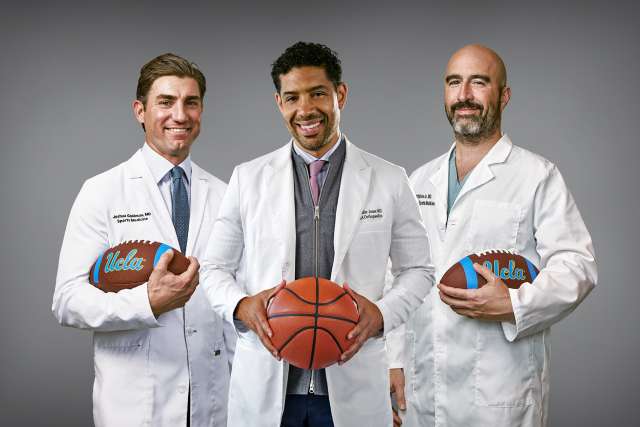
It’s not just professional athletes who rely on UCLA Health sports medicine specialists for leading-edge treatments, such as orthobiologics, to help them achieve peak performance. These therapies and other promising developments in regenerative medicine are also available for “weekend warrior” adults and high-school athletes.
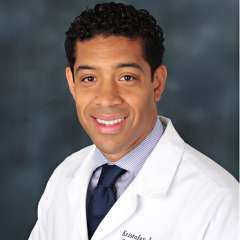
“I take care of a patient demographic that ranges in age from 15 to 75,” said Kristofer Jones, MD, orthopaedic sports medicine surgeon at UCLA Health. “They’re all very active, extremely fit, and they demand a lot from their bodies. Even though they may not be professional athletes, they still want to feel like they’re at the top of their game.”
Dr. Jones has been the head team physician and director of orthopaedic surgery for the Los Angeles Lakers since 2016 and also works with Team USA Basketball in the same capacities. Additionally, he’s a team physician for UCLA Athletics. Over the last decade, he’s seen multiple treatment modalities evolve and expand.
Providing new treatment options to the public
One treatment, blood flow restriction (BFR) therapy, helps reduce muscle atrophy, allowing athletes to regain strength and return to physical activity more quickly after injury.
“We began using BFR as a part of our standard rehabilitation protocols in 2016 and found that when an athlete was getting back from an ankle sprain or even an ACL reconstruction, it helped reduce muscle atrophy,” Dr. Jones said. The treatment is no longer restricted to professional athletes, he noted, and is now widely available as part of post-surgery rehabilitation.
Extracorporeal shock wave therapy (ESWT) also has moved beyond the professional sports world, Dr. Jones said.
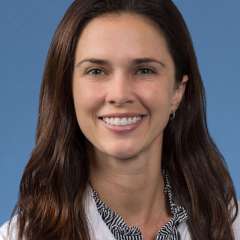
“What stood out in our professional athletes was the ability to use shockwave therapy for injuries like tendinopathy and bone contusions — conditions that usually require several weeks of recovery — and consistently see those timelines shortened to nearly half.” The treatment is now offered at the Santa Monica Orthopedics and Sports Medicine clinic, under the supervision of sports physiatrist Paige Dyrek, DO.
The uses of shockwave therapy have continued to evolve as the technology has advanced, Dr. Jones noted. “We’re now able to perform focused shockwave therapy, which concentrates the energy of the treatment to very small, specific areas,” he said, “and we can now reach tissues that are deeper within the body.”
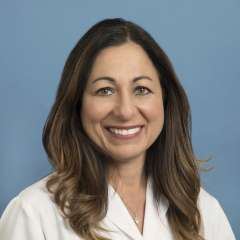
Dr. Jones and Aurelia Nattiv, MD, professor in the Division of Sports Medicine and Non-Operative Orthopaedics at the David Geffen School of Medicine at UCLA, were recently awarded a $3.5 million grant from the US Department of Defense to conduct a randomized clinical trial evaluating the effectiveness of ESWT for treating bone stress injuries. The trials are being conducted at UCLA Health and three other institutions, Dr. Jones said.
Harnessing the power of orthobiologics
Another exciting area in regenerative medicine is orthobiologics, which includes cell-based materials and other biologic substances to treat musculoskeletal injuries.
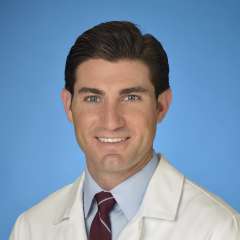
As the primary care sports medicine physician for the Los Angeles Chargers, Joshua Goldman, MD, regularly treats a variety of player injuries with several types of orthobiologic injections that offer a minimally invasive option to speed healing.
The most common injection is hyaluronic acid, a lubricating gel that naturally occurs in joints.
“It’s most helpful for the management of mild and moderate osteoarthritis,” noted Dr. Goldman, who is also an associate clinical professor of family medicine and orthopaedic surgery at UCLA Health and is the associate director for the Center for Sports Medicine at the Luskin Orthopaedic Institute for Children.
A second orthobiologic treatment that’s widely used is platelet-rich plasma (PRP). While PRP has been available for some time, “the ability to isolate platelets and other plasma components has improved substantially,” Dr. Goldman said. The treatment is used for treating cartilage breakdown and for tendinosis (thickened scar tissue within tendons), he noted.
“The PRP stimulates a healing response,” Dr. Goldman explained. “It’s filled with signaling molecules that ‘talk to’ the natural stem cells in the body and stimulate them to repair the injured tissue.”
The newest treatment option being used to treat inflammation is alpha-2 macroglobulin (A2M), Dr. Goldman said. Derived from platelet-poor plasma, a byproduct of platelet-rich plasma, it acts like a sponge and soaks up inflammatory molecules in tissue and joints, he explained.
Because of its anti-inflammatory properties, there’s minimal downtime, Dr. Goldman pointed out. “We’re always looking for new techniques to allow athletes to recover more quickly and comprehensively and to be able to continue to compete,” he said, “especially when time, and oftentimes their livelihood, is on the line.”
Dr. Goldman uses A2M regularly in his work with the Chargers and also with the professional athletes he treats at the Red Bull Athlete Performance Center, where he’s the lead physician and medical director.
In the run-up to the 2026 Winter Olympics, a number of Olympic athletes were treated at the center, Dr. Goldman noted. “A lot of them are in and out of the mountains,” he said, “but they’ll often stop through LA en route to the mountains to train.”
New trial for cartilage defects
Looking ahead, Frank Petrigliano Jr., MD, orthopaedic sports medicine surgeon and professor of orthopaedic surgery at the medical school, noted that a clinical trial for Plurocart, a regenerative therapy for repairing focal cartilage defects in the knee, is close to receiving approval from the Food and Drug Administration.
Repairing the cartilage will be done using a membrane that includes pluripotent stem cells (embryonic cells that can develop into many different types of cells), which then evolve into cartilage to fill the defect, he explained.
The new therapy was initially co-developed by Dr. Petrigliano when he was at USC. The upcoming trial will take place at UCLA and USC, with Dr. Petrigliano serving as co-investigator for UCLA, and will include patients recruited from all over Southern California, he said.
“Athletes in almost any sport can develop focal cartilage defects in the knee,” said Dr. Petrigliano. “While it isn’t arthritis, this type of cartilage injury can be painful and interfere with performance.”
Creating an ‘epicenter’ for sports medicine care
“Almost everything that we do for the pro athlete is available to the weekend warrior,” noted Dr. Petrigliano, head team physician for the Chargers and an associate team physician for UCLA Athletics.
“Especially in Southern California, people tend to stay active later in life and with more aggressive sports,” he said. “People will come to me for shoulder replacement so they can continue surfing. They will come to me over age 50 for an ACL tear, because they play pick-up soccer three days a week … . I would just say that because of the active population in Southern California and the excitement of staying active well into the older years, we see a lot more ‘master class’ athlete injuries.”
Dr. Petrigliano looks ahead to the opening of the UCLA Musculoskeletal Institute in El Segundo, which is anticipated to begin clinical operations within the next year.
“While it will be strategically positioned between the Lakers and the Chargers training facilities, its purpose is to serve the broader community,” he noted. “It will be a true epicenter for sports medicine care in Los Angeles.”