
Carrie Bearden, PhD
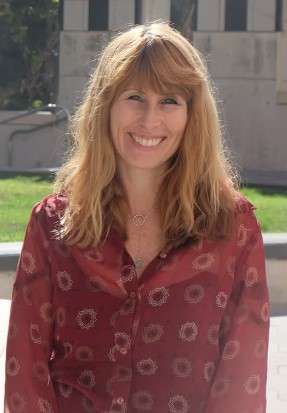
Carrie Bearden, PhD
Dr. Carrie Bearden received her Ph.D. in Clinical Psychology from the University of Pennsylvania. She completed her clinical internship at the San Diego VA Medical Center and UCSD Child & Adolescent Psychiatry Services. Dr. Bearden joined the UCLA faculty in the Department of Psychiatry & Biobehavioral Sciences at UCLA in 2003. Currently, she is a Professor in the Semel Institute for Neuroscience and Human Behavior and Brain Research Institute, with a joint appointment in the Department of Psychology. Dr. Bearden’s research aims to understand neurobiological risk factors for the development of serious mental illness in youth, using converging methods to study cognition and neuroanatomy in clinical high-risk cohorts (e.g., adolescents with early symptoms of psychosis), and in highly penetrant genetic conditions , particularly 22q11.2 mutations. Her recent work focuses on translational approaches to understanding disrupted brain circuitry in developmental neuropsychiatric disorders, particularly in the context of rare genetic disorders. In collaboration with Dr. Nelson Freimer, she is also conducting an NIMH-funded study of the genetics of serious mental illness in Latin America.
Dr. Bearden is the Assistant Editor of Biological Psychiatry, Biological Psychiatry: Cognitive Neuroscience and Neuroimaging, and Schizophrenia Bulletin. She is a Fellow of the American College of Neuropsychopharmacology and the Association for Psychological Science, and chairs the DSM-V Serious Mental Disorders Committee and the Women’s Leadership Group of the Society of Biological Psychiatry. Dr. Bearden has received numerous awards and honors, both for her research achievements and for teaching and mentorship, including Young Investigator Awards from the International Congress for Schizophrenia Research and the National Alliance for Research on Schizophrenia and Affective Disorders (NARSAD), and ACNP, the A.E. Bennett Neuropsychiatric Research Award for Clinical Science in Biological Psychiatry, and the Joel Elkes Research Award for Outstanding Contributions to Neuropsychopharmacology.