On Jan. 23, 2026, close to 6 pm, Kevin and Maria Cobb received the kind of phone call no parent ever wants to receive. Their 16-year-old daughter, Brielle, had been in a car crash, the police officer informed them. Brielle was unconscious, with multiple major injuries, and was en route to a local trauma center.
“It was just a freak accident,” Maria Cobb said. Brielle had been driving on the 73 Toll Road in Orange County and had most likely drifted to the right and then overcorrected. “She went into the center divide, fell off the embankment, then rolled multiple times and landed facing oncoming traffic.”
By the time her parents saw her at the trauma center, Brielle was intubated and in a medically induced coma. “The neurosurgeon came in and said, ‘Mom, it’s not good,” Cobb recalled. “And I said to myself, ‘She needs to go to UCLA.’”
Cobb had two family members with life-threatening conditions who had made full recoveries after being transferred from local hospitals to UCLA Health.
“I knew I was never going to be able to live the rest of my life without knowing I had tried everything in my power to keep her alive,” said Cobb. “And the only way I was going to do that was to get her to UCLA.”
The original plan was to transport Brielle via emergency helicopter, but the flight path between the two hospitals was obscured by mist and fog.
Instead, UCLA Health sent a critical-care ambulance for Brielle. “Two hours later, a lady in a white coat walks in and says, ‘Mrs. Cobb, I’m a physician from UCLA, and I’m part of the team that’s going to transport your daughter.’”
Opting against brain surgery
Isaac Yang, MD, was the attending neurosurgeon who authorized Brielle’s transfer. “This case resonated deep in my soul,” he said. “I’m the father of a teenage daughter, and I would have done the exact same thing in this scenario. I said, ‘We need to get the resources and the expertise of UCLA behind this patient.’”
By the time Brielle arrived, it was after midnight. After a CT scan, a hole was drilled in the top of her skull so a monitor could be inserted to measure her intracranial pressure (ICP).
“When I first accepted the transfer, I thought we were going to have to do a craniectomy, to remove half her skull in order to save her life. I was ready to do that surgery the moment she got to UCLA,” Dr Yang said.
Instead, he opted to wait to give her brain the opportunity to recover, while continuing to monitor her ICP and keeping her stable.
“Sometimes,” he said, “saving a life is not about a complex or dramatic surgery. It’s about making the right decision at the right time.”
In Brielle’s case, he said, “the right decision was actually not to do surgery.”
Dr. Yang vividly recalls talking to Brielle’s parents, Maria and her husband, Kevin, about his recommended approach. “It was probably the darkest hour of their life, and for me to sit with them and tell them to just sit tight and do nothing, to trust me, that was a really hard conversation to have.”
Treating her other injuries, including a broken clavicle, three broken bones in her left arm and a fractured pelvis, was also put on hold while the team at UCLA Health focused on Brielle’s brain injury.
“We have a saying, ‘Time is brain,” said Jose Pineda, MD, director of Pediatric Neurocritical Care, who oversaw Brielle’s care in the pediatric ICU. “The most critical time is in the first 72 hours, but that’s also a ballpark.”
In Brielle’s case, her brain remained swollen well past those first 72 hours. “We kept battling brain swelling and the consequent increased pressure inside her head,” he said. “Something we have learned over the years is how important it is not to give up on that. Every patient’s timeline is different.”
“She had 15 drips going just to keep her alive, to keep her ICP number down,” Maria Cobb recalled.
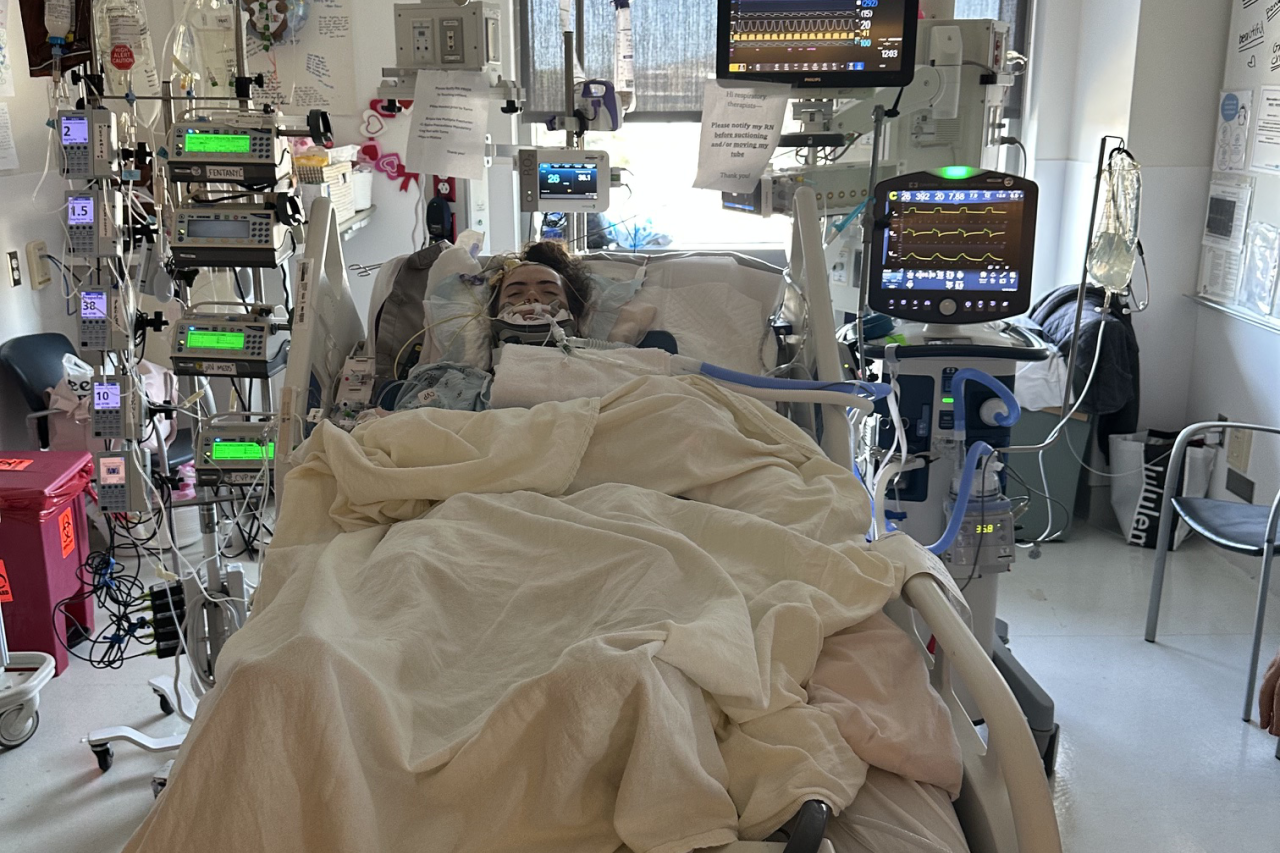
As they monitored her brain pressure, the neurocritical care team focused on preventing what Dr. Pineda characterized as secondary injuries that could aggravate the primary brain injury. That included preventing fever, and guarding against low blood pressure in order to keep her brain well-perfused and well-oxygenated.
In collaboration with the adult Neurocritical Care team at UCLA, Dr. Pineda procured a brain tissue oxygen monitor – a microscopic probe used for advanced neuromonitoring in severe cases. “We have standard parameters of what blood pressure we need to maintain, and how much oxygen we give her through a mechanical ventilator,” he said. “This type of monitoring allowed us to personalize those parameters to what she needed. Patients can change moment to moment, and we need to adapt to that.”
The monitor also measured the temperature within Brielle’s brain. A severe brain injury often causes fever, he explained, and this further exacerbates the situation.
“When you have a brain injury, every degree of fever will worsen it,” he said. “Usually, we use a combination of medications and external cooling, because it can be difficult to control with medications alone.”
Brielle was cooled with a computerized cooling pad that covered most of her body and was set to 37 degrees Celsius (98.6 degrees Fahrenheit).
Brielle also benefited from high-resolution monitoring that provided continually updated readings on key metrics. In the past, measurements might have been taken once an hour, Dr. Pineda explained, but this minute-to-minute information also made a difference in her care. “The richer information you have, the better decisions you’re able to make,” he said.
Brielle’s mom described the process as “a fine dance.”
“They had a whole neurology team watching her brain activity,” she said. “It was constant – four or five meds being administered at one time to keep her brain pressure down, but they did it. It was a lot of work, but they did it.”
She characterized Dr. Pineda as the quarterback and praised the collaboration between the numerous medical teams taking care of Brielle.
Due to the severity of Brielle’s brain injury, operating on her other injuries was postponed. However, there was one surgery that was best done sooner rather than later: repairing her fractured pelvis, according to Brielle’s orthopedic trauma surgeon, Christopher Lee, MD.
It would be a less invasive procedure if done relatively quickly, but more complex later on, he explained to Dr. Pineda.
“We chose this approach of ‘If it’s best for her, let’s do it now,” Dr. Pineda said, “but let’s bring in somebody who can manage her brain injury at the state where it is now.’”
Because Brielle was still heavily sedated and under careful monitoring for brain swelling, Dr. Pineda brought in neurosurgical anesthesiologist Jack Buckley, MD.
“He came and met with me in the ICU, and we discussed a plan to make sure her brain would be OK during the surgery,” Dr. Pineda said.
That surgery took place Feb. 5. Meanwhile, a team of pediatric critical care intensivists, including Dr. Pineda and Yonca Bulut, MD, medical director of the Pediatric Intensive Care Unit, and Justin Greenberg, DO, continued to monitor Brielle.
It wasn’t until Feb. 15 – 21 days after being admitted to UCLA Health – that Brielle’s brain tissue oxygen monitor could be removed. “That’s a long time,” Dr. Pineda said. “It reflects how severe her injury was.”
Two days later, Brielle underwent surgeries on her clavicle and on her arm. She was still sedated and intubated, and her other intracranial pressure monitors were still in place so her brain could continue to be monitored during the procedures.
Regaining consciousness
As Brielle’s brain continued to heal, her care team slowly began backing off her sedation while closely monitoring her brain pressure and adjusting the pace and medications as needed.
“The question was when we were going to back off for good, and the answer is that we listened to her and did it when she told us she was ready,” Dr. Pineda said. “Once we were able to minimize or eliminate her sedatives, we expected her to regain consciousness.”
Finally, on Feb. 20, Brielle’s brain swelling had decreased to the point where the ICP monitor could be discontinued. It had taken 26 days.
“We took the monitor out and were basically trying to get out of her way,” Dr. Pineda said. “And then, little by little, she started making progress.”
About 10 days after the monitor was removed, Brielle was able to open her eyes. The next step was ensuring Brielle was able to breathe on her own. “Once you can demonstrate that you can protect your airway, that you’re not going to choke, we can take the breathing tube out,” Dr. Pineda said.
Continued recovery
Even at this point, Brielle wasn’t out of the woods. The medications and treatment she was receiving meant several other organs were under considerable strain.
“Think of receiving care for severe head trauma as running three marathons,” Dr. Pineda said.
As part of monitoring Brielle’s recovery, her care team kept a close watch on her liver and her kidneys. “These were very high-potency medications she was on,” Dr. Pineda said. “Everything that we did was necessary, but as soon as we had the opportunity, we backed off so we didn’t expose her unnecessarily to medications that could produce long-term liver or kidney injury.”
Her lungs were another area of concern, as they’d been damaged in the car crash and were also affected by lying in bed in the ICU for so long.
Moreover, she wasn’t yet able to track and focus her eyes or control her limbs.
“She was looking off into space,” Cobb recalled. “Then she could look at you, but she couldn’t talk.” During this time, Brielle’s arms and legs were “moving out of control, like a worm,” she said.
“Being awake and interacting with your environment is more complex,” Dr. Pineda pointed out. With brain injuries, “the most complex functions are the first ones to go away, and the last ones to come back.
“Regaining these functions is an imperfect process,” he said. “There are probably thousands, if not millions, of connections or reconnections taking place.”
Ready for rehab
By now, it was early March. Having successfully treated Brielle’s brain injury so she could regain consciousness, her care team shifted their focus to getting her stable enough to be transferred to a rehabilitation facility.
Regaining complex functions such as walking and talking represent “the most meaningful level of recovery,” Dr. Pineda said. “That’s why we worked so hard, to give Brielle the biggest chance of getting to that level of recovery, to allow her to go back, as close as possible, to how life was before the accident.”
The last hurdle prior to transferring to a rehabilitation facility in Chicago: getting Brielle’s liver numbers down. Rehabilitation facilities require patients to be “medically clear,” Dr. Pineda explained, “so they can focus 100% on their rehabilitation.”
On March 17, Brielle was ready to leave UCLA.
Returning to regular life
Brielle spent the next 2 1/2 months at the rehabilitation facility, which specializes in patients with traumatic brain injury (TBI), regaining the ability to walk and talk.
By the end of June – five months after the crash – Brielle was released and ready to come home.
“It’s almost unbelievable, but the only thing she has is short-term memory loss,” Cobb said. “It’s still recovering and repairing. But you would look at her and never even know she’s a TBI survivor.”
Brielle has also since completed all of the coursework she missed due to her injuries, Cobb said. In August, she returned to school for her senior year.
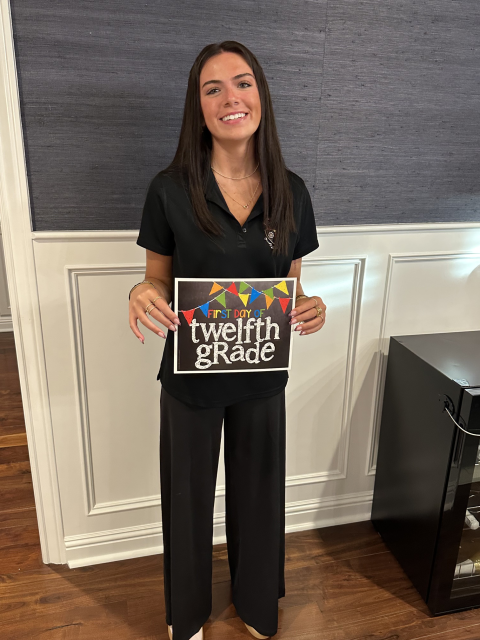
Brielle’s voice was affected by her lengthy intubation, but is continuing to get stronger. She was recently evaluated by otolaryngologist Jennifer Long, MD, PhD, who determined that she has no long-term damage to her vocal cords.
In addition to ongoing voice therapy at UCLA Health, Brielle has occupational therapy, physical therapy and speech therapy every week at a local rehabilitation facility. Her non-speech-related therapy is overseen by Nitin Bajaj, DO, a physical medicine and rehabilitation specialist.
Gratitude for UCLA Health
Brielle’s care team at UCLA Health made her long-term recovery their top priority, Cobb said.
“They never gave up during critical moments,” she said. “They celebrated her recovery right along with us, and treated our family with compassion and dignity and genuine love.”
Cobb also is grateful to UCLA for respecting and supporting their Christian faith throughout Brielle’s hospitalization. “A chaplain came up regularly to pray with us, which meant so much to our family during that time,” she said.
As she summed up, “UCLA turned what seemed impossible into a story of hope and healing.”
The UCLA Health providers who cared for Brielle feel similarly.
“When I say that this is the most miraculous recovery I've seen at UCLA in 17 years, I don't say that lightly,” Dr Yang said. “I mean that as a statement of fact. This was really remarkable treatment and a remarkable story.
“I don’t know what the numerical odds are, but I think her recovery is a miracle. And what are the odds of a miracle?”