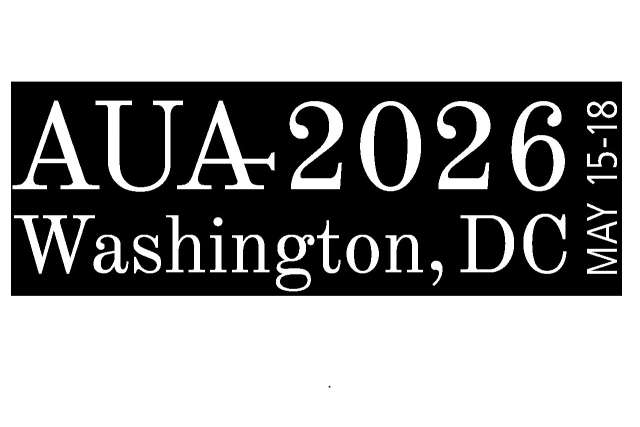
UCLA researchers and surgeons will present on the world’s first human bladder transplant and the latest findings on prostate cancer, Peyronie’s Disease, endothelial health and other related topics at the American Urological Association (AUA) 2026.
The annual meeting, running May 15 – 18 at the Walter E. Washington Convention Center in Washington DC, brings urologists from around the world to present groundbreaking research, new guidelines, and advances in urologic medicine. It includes meetings with colleagues as well as plenary, poster, podium, forum and video sessions.
Here are some key presentations:
Friday, May 15
“Detection Rate of Prostate Cancer Using Prostate-Specific Membrane Antigen/Ultrasound-Fusion Biopsy in Patients with Suspected Recurrence or Inconclusive/Negative Biopsies: A Single-Center Retrospective Study”
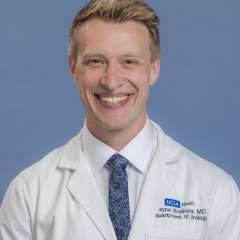
PRESENTER: Dr. Wayne Brisbane, assistant professor of urology
TIME: 2:12-2:20 p.m.
LOCATION: 207A
SUMMARY: Sixty-two patients with 89 lesions were analyzed. Detection rates were 66% (41/62) at the patient level and 58% (52/89) at the lesion level. PSMA/US-fusion biopsy shows favorable diagnostic performance and clinical utility in identifying PCa lesions in a more challenging subset of patients. Considering PSMA PET parameters and patient background may help optimize lesion targeting.
"Reduction of Serum Plasminogen Activator Inhibitor-1 and Improvement in Endothelial Function by a Nitric Oxide Generating Nutraceutical"
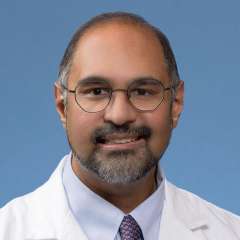
PRESENTER: Dr. Sriram V. Eleswarapu, associate clinical professor of urology
TIME: 3:30 - 5:30 p.m.
LOCATION: 202A
SUMMARY: Elevated plasminogen activator inhibitor-1 (PAI-1) and impaired endothelial nitric oxide (NO) bioavailability are key contributors to cardiovascular disease and major adverse cardiovascular events (MACE). The researchers evaluated the in vivo effects of oral COMP-4 supplementation on serum PAI-1 levels and endothelial function, measured by brachial artery flow-mediated dilation (FMD), a physiological surrogate of endothelial NO production. They found oral supplementation with a nitrergic natural product markedly reduces serum PAI-1 and improves endothelial function, suggesting a novel non-pharmacological approach to improving endothelial health. Longer-term studies on diverse age groups are needed to validate these short-term findings.
Sunday, May 17
“Associations of African ancestry-specific variants and risk of prostate cancer incidence in the Veterans Affairs Million Veterans Program”
PRESENTER: Dr. Mary Fakunle, urologic oncology fellow
TIME: 7 – 9 a.m.
LOCATION: 145AB
SUMMARY: The Million Veteran Program genotyping cohort included 106,145 participants of African ancestry (AFR), of whom 21,229 (20%) had a diagnosis of prostate cancer. The risk factors found in earlier studies of people with African ancestry were similar to the veteran’s group. These results suggest that certain AFR ancestry specific variants should be included on standard genetic testing panels and incorporated into risk profiling for prostate cancer in AFR ancestry men.
Monday, May 18
Bladder Transplantation: A New Frontier
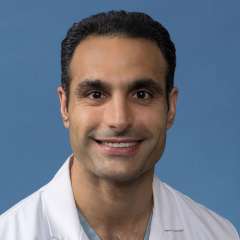
PRESENTER: Dr. Nima Nassiri, assistant clinical professor of urology and director of the UCLA Vascularized Composite Bladder Allograft Transplant Program
TIME: 8:30 - 8:45 a.m.
LOCATION: Hall D
OVERVIEW: UCLA Urology will present its first-in-human bladder transplant program at the State-of-the-Art lecture at the American Urological Association. The program represents a new approach to treating end-stage bladder disease using organ transplantation. It is conducted under a formally approved clinical trial (NCT#05462561). The goal is to restore urinary function and avoid bowel-based urinary diversion. The work builds on years of surgical development and multidisciplinary collaboration. Early experience supports feasibility and continued clinical investigation.
“Final Results of a Multicenter Retrospective Analysis of Collagenase Clostridium Histolyticum (CCH) for Ventral Penile Curvature in Peyronie's Disease”
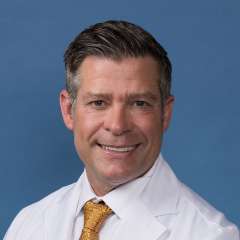
PRESENTER: Dr. Jesse Mills, clinical professor of urology and director of The Men’s Clinic at UCLA.
TIME: 9:30 – 11:30 a.m.
LOCATION: 146C
OVERVIEW: Xiaflex has been FDA approved since 2013, and remains the only FDA approved drug for Peyronie’s. Initial clinical trials excluded men with ventral curve for fear of injuring the urethra with injection. Ventral curve is not contraindicated in the label and therefore, injecting ventral curve is not off-label but never previously studied. This multi-institutional study demonstrates essentially equal efficacy to dorsal or lateral curves so men with ventral curvature should expect similar positive outcomes with Xiaflex. Study results showed a 34.5% improvement in ventral penile curvature, similar to the pivotal studies of CCH in Peyronie’s Disease. The technique for ventral curve is somewhat more challenging and therefore, should be performed by surgeon with high injection volume.