The decades-old scientific quest to create brand new proteins has been turbocharged in the era of artificial intelligence.
A key building block for life, a protein can serve as structural support, messenger, catalyst or transport system depending on the amino acids that make it up and on its resulting 3D shape. That versatility makes designed proteins an expected game changer in medicine, industry and research.
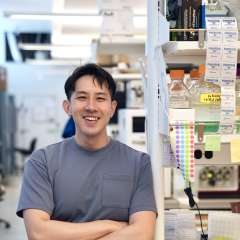
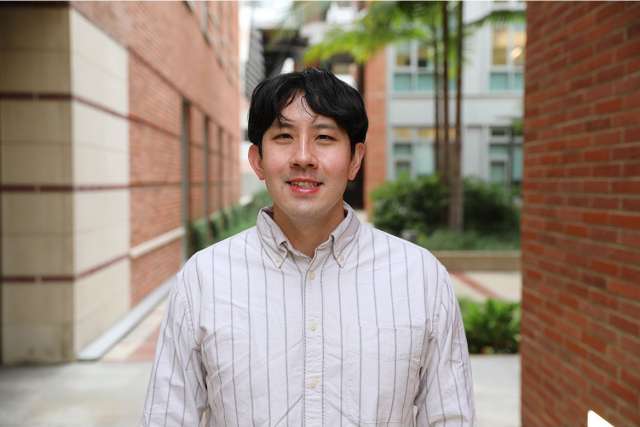
Among today’s vanguard in generative AI–enabled protein design is Jason Zhang, an assistant professor of bioengineering in the UCLA Samueli School of Engineering. Before joining the faculty in 2025, he was a postdoctoral researcher in the University of Washington lab led by David Baker, who earned a 2024 Nobel Prize in Chemistry for breakthroughs in computational protein engineering.
Zhang, a member of the California NanoSystems Institute at UCLA (CNSI) and the UCLA Health Jonsson Comprehensive Cancer Center, aims to continue that pathbreaking tradition in search of new drugs and new fundamental biological insights. In an interview, he discussed the techniques behind protein engineering and its potential for the future.
I could see the promise of using a computer to dream up proteins never seen in biology. It’s an exciting field still very much in its infancy, but I am confident it is the future.
For my Ph.D., I did some traditional protein engineering to build molecular tools to understand basic biological questions. It was a laborious process, even when I finished my degree in 2020.
Then I saw some studies from David Baker’s lab. Instead of allowing biology to evolve to find you a good protein, his team was rationally designing it. AI was exploding when I joined his lab. By the time we published programs, they already seemed old because things were moving so fast.
What does the protein engineering process look like?
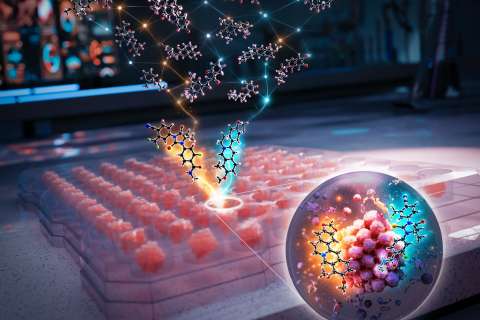
We develop AI models, aiming to improve success rates in building proteins that work and that can be used as drugs. The models are trained using experimental data. We usually start with a target we want the protein to bind to. The AI generates different proteins and gives us amino acid sequences. We reverse translate them into DNA and express the proteins in the wet lab.
We can test 20,000 designed proteins in one experiment to see whether they bind to a target. When certain proteins seem to work, we test them individually. After that, we can do experiments in cells and different disease models.
What types of questions are you asking in your research, and where might the answers lead?
Engineering, to me, is a means to an end. I want to understand cells better. We build tools such as biosensors to measure a lot of different biological processes. Thinking about old questions with new lenses — and building tools to answer questions that still haven’t been cracked — can lead us to interesting discoveries.
The virtual cell is a big vision I’m interested in. If these new tools, such as biosensors, can generate a lot of data to profile cells left and right, up and down, we might be able to create a digital twin. Maybe one day, an AI model can predict how various drugs affect, say, immune cells or cancer cells.
Our translational research happens through collaborations. We’re building diagnostic molecules and tools to aid in drug development. For instance, we work with other folks at UCLA to target a rare liver cancer with CAR-T cells, an immune therapy that’s been successful for blood cancers.
A huge part of my lab focuses on disordered proteins. They drive neurodegenerative diseases, diabetes and some cancers, among other conditions. Disordered proteins are traditionally difficult to target because they take many different shapes. Small-molecule drugs need a protein pocket to get snug in, but disordered proteins don’t have predictable pockets to begin with.
So we use generative AI to create totally new folds meant to drug the undruggable. We want to force the disordered protein to become ordered by reversing things. The binder we create has the pocket, essentially, that the disordered protein fits into.
Another big vision for AI protein design relates to precision medicine. The understanding of how disease works is getting more and more granular, and one disease category can be broken up into many different diseases. Years from now, if our methods are successful, we could potentially make therapies individualized per patient.
Why pursue this work at UCLA?
I love the mission of public education. I’ve been at public schools my entire academic career, from elementary school back in Virginia through my postdoc at University of Washington. And now I’m at UCLA, where we educate people of all backgrounds, primarily focusing on educating California, as well as being an engine of innovation and discovery.
I also enjoy the overall vibe of doing research at UCLA. People are very serious about their science, but there’s also work-life balance. The research environment is unique. UCLA has every school you can think of, and the medical school in particular is very important to my research.
My lab is in CNSI, which is located in between the medical school and the engineering school, and has a lot of great facilities. The staff there has gone above and beyond helping accelerate my research.
What impact has federal funding had on your science?
I was fortunate to receive a National Institutes of Health Pathway to Independence Award. That has been instrumental for finishing my postdoc and starting my UCLA lab. It’s a comfort to know I have resources to pay people and get the lab running. I don’t know what would happen if I didn’t have that NIH funding.