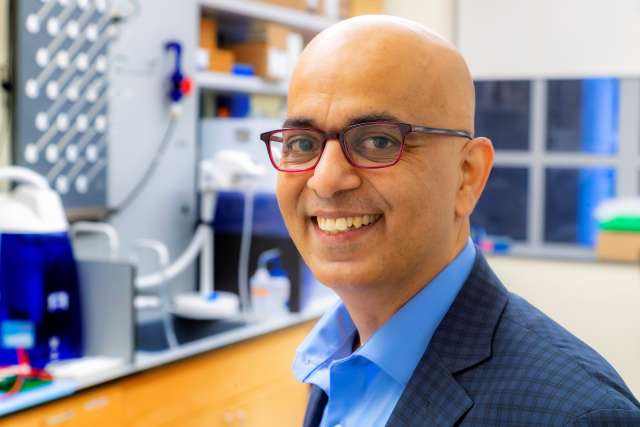
UCLA Health professor of medicine and the UCLA Comprehensive Liver Research Center director Dr. Rajat Singh has received a $3 million federal grant to investigate how aging affects a brain region that helps control metabolism, and whether reactivating a specific group of neurons could keep our metabolism healthier for longer.
Metabolism declines as people age, which can raise the risk of weight gain, diabetes and other conditions. A possible factor in this decline is autophagy, the cellular recycling process used to clear out damaged or misfolded proteins and repurposing them. Similar to other bodily processes, autophagy also becomes less effective as people age, with the buildup of damaged proteins being a hallmark symptom of aging and neurodegenerative diseases such as Alzheimer’s disease.
In his new study funded by the National Institute on Aging, Singh and colleagues will investigate a group of excitatory neurons in the paraventricular hypothalamus, a small brain region that regulates energy balance and stress response, as a potential intervention target. Singh’s lab will map this brain region in models of aging and of protein buildup in the neurons. The researchers will also examine the role of a specific gene, ZBTB16, that could influence how these neurons function as the body ages. The lab will also test whether stimulating these neurons while restoring autophagy could delay age-related metabolic decline.
Singh said the findings could point toward new approaches for maintaining metabolic health later in life.
“Thanks to the Spatial Transcriptomics Core of the UCLA Comprehensive Liver Research Center, we are now addressing fundamental complex questions on how specific neurons regulate hepatic and systemic metabolism, which will, in the near future, allow us to delay age-related diseases and extend health span,” Singh said.
The study is set to conclude in June 2031.