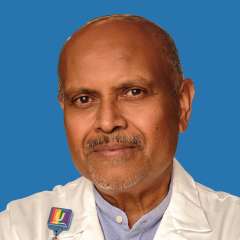
Renowned geroscientist and computational biologist Steve Horvath, PhD, is returning as a professor in the David Geffen School of Medicine at UCLA on July 1, after 4 1/2 years in the biotech industry. Previously, he was a full-time professor of Human Genetics and Biostatistics at UCLA for 22 years.
Geroscience is the modern term for the biology of aging. Dr. Horvath, who was born in Germany, is internationally known for his research into the aging process and, in particular, epigenetics, how the environment influences our genes, affecting a person’s longevity.
His groundbreaking research, which he began at UCLA in 2011, looked at the “epigenetic age” of more than 13,000 DNA samples of people from the U.S. and Europe, determined from the chemical modifications of their DNA (also called DNA methylation).
People whose epigenetic age was higher than their chronological age were shown to be at an increased risk of death from all causes. From this, Dr. Horvath developed the “epigenetic clock,” a way of measuring biological aging and mortality risk.
“The universal mammalian methylation clock was really a UCLA triumph — a true team effort,” said Dr. Horvath, who received the 2026 Luminary Award at the Precision Medicine World Conference. That project, part of the international Mammalian Methylation Consortium that Dr. Horvath led, drew on collaborators across UCLA, including Jason Ernst, PhD; William Yang, MD, PhD; Ebru Erbay, MD, PhD; Karen Sears, PhD; and Ren Larison, PhD.
Aging is a growing field of study and the Division of Geriatrics is a research leader.
“Aging happens at the cellular level — every tissue in the human body shows signs of aging,” explained Arun S. Karlamangla, MD, PhD, chief of the UCLA Division of Geriatrics. “The epigenetic profile is affected by stresses in life. As we age, these stresses change DNA functionality. Dr. Horvath’s research showed that these changes can be quantified and used to predict a person’s lifespan.”
None of us has control over the DNA we’re born with, but we do have some control over how long we live.
“The epigenetic clock is one window into biological aging, but it doesn't capture everything, and plenty of well-established factors influence how long and how well a person lives,” said Dr. Horvath. “The strongest evidence is for the basics: not smoking, maintaining a healthy weight, a sensible diet, regular physical activity and good sleep.”
Dr. Horvath has run the test on himself and by the epigenetic clock, he is about three years younger than his chronological age of 58.
New medications also show promise for improving longevity, he said. “There’s active research interest in newer GLP-1 receptor agonists — e.g., the Ozempic/Wegovy class — which are reshaping how we think about metabolic health,” said Dr. Horvath, adding that the same is true for anti-inflammatory and antifibrotic drugs.
Dr. Horvath’s epigenetic clocks have become standard tools across aging research, used by teams worldwide to test what actually changes biological aging.
They have been applied in the randomized DO-HEALTH trial, where omega-3, vitamin D and exercise modestly slowed epigenetic aging in adults older than 70; in the Women’s Health Initiative, where faster epigenetic aging tracked with later cognitive impairment and dementia; and in studies of cardiovascular disease and mortality. This kind of population-level application aligns closely with the Division of Geriatrics’ emphasis on healthy, independent life expectancy.
Dr. Horvath’s research has also shown that the cells of different organs age at different rates. For instance, the liver ages faster than other organs, he said, particularly in the case of people with obesity.
Another discovery was that the blood and brain tissues of human males age faster than those of females, which might be the reason women live longer on average than men across all cultures and countries.
Leading in aging research
The study of aging at the UCLA Division of Geriatrics focuses on understanding the epidemiology of age-related conditions such as frailty, cognitive impairment and dementia, and improving the delivery of compassionate, comprehensive care to older adults.
Dr. Horvath’s return to UCLA will bolster the department’s role in aging research by translating his cellular research to clinical trials, said Dr. Karlamangla.
“We want to be pioneers in all three aspects: cellular research, clinical and population-level research, and health services and implementation research,” Dr. Karlamangla said. “We are one of the pioneers in clinical innovation for the delivery of healthcare to older adults,” he said, an approach that is called bench to bedside.
Life expectancy is important, but even more important is good health, which is necessary for independence, Dr. Karlamangla emphasized. This is referred to as healthy life expectancy, or independent life expectancy.
New work at UCLA
Along with serving as a professor, Dr. Horvath will return to UCLA Health as director of aging biology research in the Department of Medicine, working across 11 divisions. In this way, he will work directly with doctors to apply aging research to their patients. The move into the Department of Medicine is deliberate: his focus now is translating discoveries from aging biology into care for patients.
“What I'm most looking forward to in returning to UCLA is the people and the collaborative environment,” said Dr. Horvath. “UCLA has remarkable strength across medicine, computational biology, stem cell biology, and the basic science of complex diseases, and being back in that setting with former colleagues and future students is what excites me most.
“It feels like the right place to do the next phase of this work: helping to translate findings from aging biology into the clinic.”