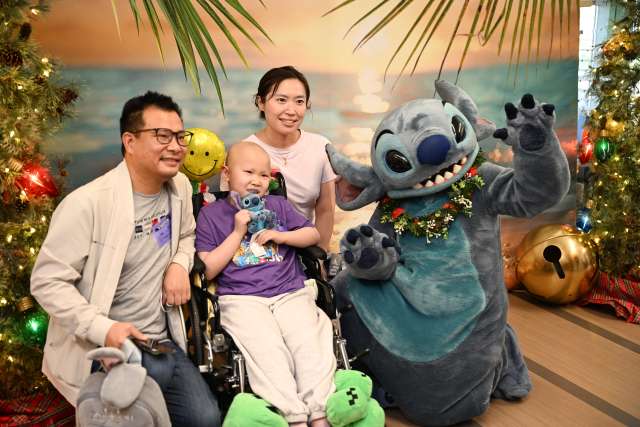
In February 2025, Grace Tan’s right leg began to ache. Her parents were puzzled, as there were no obvious causes for their 6-year-old’s recurring leg pain, which only occurred at night.
Concerned, Grace’s mom, Jing He, brought her to their local pediatrician in Beijing, China, who examined Grace and recommended a biopsy.
During the 10-day wait for the results, Jing He began to research the range of potential diagnoses. She learned that the worst possibility was osteosarcoma, a rare form of bone cancer that’s most common in children and adolescents. It often occurs near the ends of the long bones of the arms and legs, close to the growth plates, the area where bone growth occurs.
Often, one of the first signs of osteosarcoma is nighttime pain.
In early March, the results came back: Grace indeed had osteosarcoma, and it was located near the base of her right femur.
Finding the best treatment for Grace
Starting treatment as soon as possible was essential to help keep the cancer from spreading. Just two weeks later, Grace began undergoing chemotherapy at one of the top hospitals in Beijing.
She would need two rounds of chemotherapy to try to shrink the tumor as much as possible prior to surgery. Then, following the surgery, she’d need four more rounds of chemotherapy to target any remaining cancer cells.
Because of the tumor’s location, the surgeons planned to remove the affected area of Grace’s right femur as well as the knee joint, providing her with a total knee replacement known as a megaprosthesis. While the procedure would allow her to keep her leg, it meant that she’d lose the growth plate at the bottom of her femur, which would lead to her right leg being dramatically shorter than her left as her left leg continued to grow.
In addition, removing the knee joint would require a knee replacement. This, in turn would need replacing as she grew, given that the knee implant used at age 6 would not be sufficient to support her weight once she was older.
While Grace underwent her first round of chemotherapy, Jing He continued to explore surgical treatment options at other hospitals.
She and her husband, Wei Tan, searched for pediatric sarcoma centers and surgeons with extensive experience in complex limb-salvage and reconstruction, looking specifically for treatment options that would allow Grace to retain the growth plate at the base of her femur.
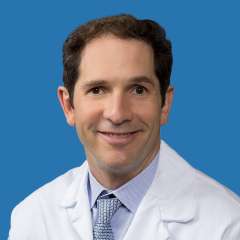
First, Jing He reviewed the most recent bone-cancer treatment guidelines of the National Comprehensive Cancer Network, an alliance of leading cancer centers in the United States. She noted that UCLA Health orthopedic oncology surgeon Nicholas Bernthal, MD, was one of the contributing experts.
Then, as she searched for information about pediatric limb-salvage surgery clinical outcomes, Dr. Bernthal’s name came up again, as did information about the UCLA Health Pediatric Bone and Soft Tissue Sarcoma Program.
Jing He decided to reach out to see if Dr. Bernthal, who also serves as chair and executive medical director of the Department of Orthopedic Surgery at the David Geffen School of Medicine at UCLA, would be able to treat Grace.
A coordinated approach, backed by deep expertise
In addition to the medical complexities of Grace’s case, there was also the fact that she and her parents lived outside the United States. From the start, the family worked with Amy Sun, a patient relationship manager with Patient Navigation and Business Services, who helped coordinate Grace’s care and provided communication and logistics support.
“She guided us throughout our treatment journey,” Jing He said.
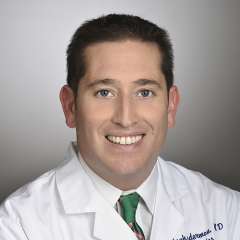
Sun first helped arrange an initial video consultation with Dr. Bernthal and with pediatric hematologist-oncologist Noah Federman, MD, director of the Pediatric Bone and Soft Tissue Sarcoma Program and a member of the UCLA Health Jonsson Comprehensive Cancer Center.
Dr. Bernthal, also a member of the Cancer Center, laid out his plan, which would remove the tumor but leave the growth plate intact.
In a case such as Grace’s, the standard procedure would indeed be a megaprosthesis to replace the portion of the affected bone and the nearby knee joint, Dr. Bernthal noted. However, he thought her tumor’s location, about two centimeters above the growth plate, provided just enough room to avoid having to remove it.
“It was tight,” he acknowledged. “But we thought we had room.”
Following the first round of chemotherapy in Beijing, Grace would begin treatment at UCLA Health. As with the initial treatment plan – standard for osteosarcoma – she would need two rounds of chemotherapy prior to surgery and four rounds afterward.
Having both Dr. Bernthal and Dr. Federman involved from the outset gave Jing He and her husband peace of mind that they’d made the right decision. “We could sense the strong collaboration, mutual trust and alignment between the surgical and oncology teams,” she said. “This level of coordination and teamwork was extremely important, and ultimately made us feel confident entrusting Grace’s care to UCLA.”
“Our involvement really started shortly after she was diagnosed in China,” Dr. Federman said. “With telemedicine, we could start the intake process and get her started on the right treatment.”
In May of 2025, the family flew to California, and Grace started chemotherapy at Ronald Reagan UCLA Medical Center.
Due to their potentially life-threatening side effects, the three cornerstone chemotherapy medications used for patients with osteosarcoma require intensive management and oversight, Dr. Federman said.
“Each round – what we call a cycle – is actually three hospital stays,” he explained. “All of the chemotherapy is given in the hospital because of how dangerous it can be and the need for intensive IVC (inferior vena cava) hydration. You’re in the hospital for three to four days, you’re out of the hospital for three to four days, then you’re back, and then you get a couple of weeks off. It’s difficult, as you can imagine, for the patient and the family.”

During all of her hospital stays, Grace was visited regularly by members of the UCLA Health Child Life program. “They supported her during procedures and helped ease her anxiety, especially during needle-related treatments,” Jing He said. The Child Life Specialists also helped lift Grace’s spirits, playing games with her and bringing her painting supplies, and even a pair of Minecraft-theme pajamas after learning that Grace was a fan.
For future growth, a combined allograft and autograft
By July of 2025, four months after her osteosarcoma diagnosis, Grace was ready for surgery.
Dr. Bernthal removed the affected areas of Grace’s femur and replaced them with a combined allograft (a donated bone) and autograft (her own bone).
He likened the donated bone to the bun of a hot dog and Grace’s own bone as the hot dog inside it: The donated femur, procured from a bone bank, was the right size for six-year-old Grace. But as a dead bone, it wouldn’t be able to grow, he explained, and it would also be prone to fractures.
Instead, the surgical team at UCLA Santa Monica Medical Center removed Grace’s fibula (the smaller bone from her lower leg) and nestled it within the donated femur, connecting the fibular blood vessels to the surrounding blood vessels in her thigh.
The combined transplant allowed them to “biologically supercharge a dead bone,” Dr. Bernthal explained. “Perhaps most importantly, this allows Grace to maintain a bone that will grow over time and also allows her to keep her own knee joint.”
It was an ambitious surgery, he noted, given the location of Grace’s tumor, but was one that he and the team at UCLA Health do fairly often. “You can only do the surgery if you have a really big team with some experience with it,” he said.
Post-surgery chemo and other recovery
Following the surgery, Grace underwent four more rounds of chemotherapy as part of the treatment plan to target any remaining cancer cells in her body.
By November of 2025, having completed her final round of chemotherapy, she was ready to begin physical therapy to regain strength and mobility.
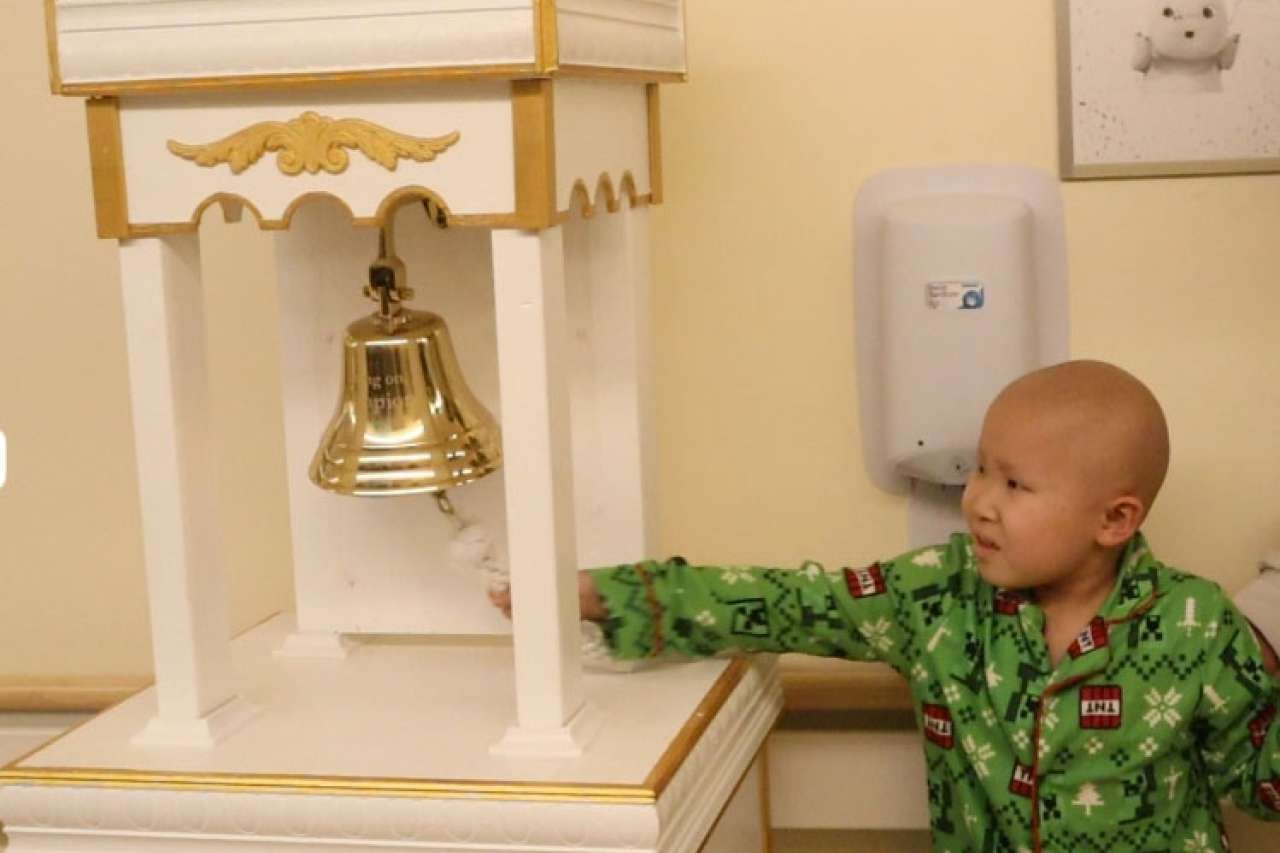
Because she hadn’t been able to put any weight on her leg for so long, Grace developed a stress fracture when she first started trying to walk again and ended up in a cast.
But, since getting her cast removed in early February 2026, Grace has been able to resume physical therapy.
“We’re very grateful for the support and encouragement from the care team,” Jing He said.
For the next two years, Grace will continue to be seen every three months and will undergo various scans for any signs of cancer. Her leg will also be examined to ensure it’s continuing to heal and grow as intended, Dr. Bernthal said. “We need to observe all of the mechanical aspects: The alive bone has to heal and fuse to her bone, and her growth plate needs to continue growing.”
Grace will then be seen every six months for several more years, and then annually after that, he said. Even after they return to China, Jing He plans to return to UCLA Health for many of Grace’s follow-up visits.
“For this type of cancer, the follow-up is very important,” she said.
Since shortly after arriving in California for Grace’s in-person treatment, Jing He has been sharing updates about Grace’s health journey via a Chinese social media platform. “I try to offer practical information and share insights on navigating care and understanding standardized treatment approaches, in the hope of being helpful to others facing similar situations,” she said.
She posts several times a week, prompting many personal inquiries from families seeking guidance.
“I’ve been contacted by dozens of patients in China since then,” Dr. Bernthal said.
While every tumor is different, he said, “we have a huge, amazing team, which allows us to push the limits.”