
Neurosurgery
Janel Le Belle, PhD
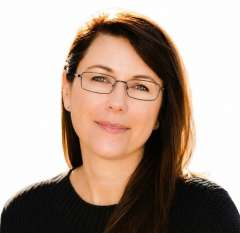
Janel Le Belle, PhD
Associate Adjunct Professor
Academic Affiliation
David Geffen School of Medicine at UCLA
Department of Neurosurgery
PO Box 956901
Los Angeles, CA 90095-6901
Contact: (310) 983-3486
[email protected]
Education
- Ph.D., Biochemistry, University College London, 1995-1999
- B.A, Philosophy, Neuroscience, University of Florida, 1990-1995
Research Area
The Le Belle Lab studies how the brain processes sensory information, and what happens to cognition and emotional regulation when that processing goes wrong. Our central interest is sensory over-responsivity, a phenotype that appears in two conditions not usually studied together: autism spectrum disorder and repeat mild traumatic brain injury. Both involve neuroinflammation, both produce lasting changes in sensory reactivity and habituation, and in both cases we think disordered sensory processing is a meaningful contributor to the cognitive and affective symptoms that patients and families care about most.
Work in the lab spans molecular, cellular, and circuit levels, and moves in both directions between mouse models and human participants. Current projects include: mapping brain reactivity, habituation, and functional connectivity to aversive stimuli using awake, sensory-evoked functional imaging in mouse models; testing the causal contribution of specific circuits to sensory over-responsivity with DREADD chemogenetics and low-intensity focused ultrasound stimulation; asking whether sensory-evoked autonomic arousal tracks brain activation and symptom severity across species; and examining how pre-existing inflammatory conditions shape neurobiological and functional outcomes after brain injury. On the clinical side, we are actively developing studies with the UCLA Brain Injury Research Center and BrainSPORT programs to characterize sensory dysregulation in post-concussion syndrome, combining sensory-evoked brain and cardiac physiological measures to ask how sensory processing dysfunction contributes to cognitive impairment and how it interacts with motor function.
We are also building human model systems for questions mouse genetics cannot reach, including patient-derived iPSC neuronal cultures, cerebral organoids, and immune-competent human microglia chimeric mice. A newer line of work uses functional ultrasound localization microscopy to follow vascularization and graft-host functional integration in transplanted human cerebral organoids. Running through much of this is a theoretical interest in predictive coding as a framework for normal and disordered perception, tested at both the cellular and circuit levels.
Dr. Le Belle also teaches Functional Neuroanatomy, Neurophilosophy (Consciousness, Cognitive Science), and Neural Stem Cells: Biology, Diseases, and Therapies for the UCLA Interdepartmental Neuroscience Program.