
Directors
Director
Elaine Y. Hsiao, PhD

Director, Goodman-Luskin Microbiome Center
Goodman-Luskin Endowed Chair in Microbiome Research
Associate Professor, Department of Integrative Biology & Physiology
Division of Life Sciences, UCLA College of Letters & Sciences
Vatche and Tamar Manoukian Division of Digestive Diseases, Department of Medicine
Department of Microbiology, Immunology, Molecular Genetics
David Geffen School of Medicine at UCLA
Dr. Hsiao leads a laboratory studying fundamental interactions between the microbiome, brain and behavior, and their applications to neurological disorders. Inspired by the interplay between the microbiota and nervous system, the Hsiao laboratory is mining the human microbiota for microbial modulators of host neuroactive molecules, investigating the impact of microbiota-immune system interactions on neurodevelopment and examining the microbiome as an interface between gene-environment interactions in neurological diseases. Their discoveries have led to several honors, including the Chan Zuckerberg Initiative Ben Barres Career Award, Packard Fellowship in Science and Engineering, Alfred P. Sloan Fellowship in Neuroscience, Klingenstein-Simons Fellowship in Neuroscience, Kavli Fellowship of the National Academy of Sciences, National Institutes of Health Director’s Early Independence Award, Forbes’ 30 Under 30 in Science and Healthcare and National Geographic’s Emerging Explorer Award. She received her PhD in neurobiology from Caltech, and her BS in microbiology, immunology and molecular genetics form UCLA.
Founding Director
Emeran A. Mayer, MD
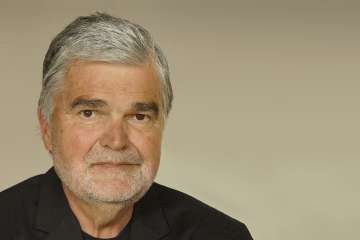
Founding Director, Goodman-Luskin Microbiome Center
Director, G. Oppenheimer Center for Neurobiology of Stress and Resilience
Professor of Medicine, Physiology and Psychiatry
Vatche and Tamar Manoukian Division of Digestive Diseases
David Geffen School of Medicine at UCLA
Dr. Mayer received his MD degree from the Ludwig Maximilian’s University in Munich, Germany, in 1976, completed his residency at the Vancouver General Hospital in Vancouver, Canada, and his GI fellowship training at the UCLA/VA Wadsworth Training Program. Dr. Mayer has a career long interest in clinical and research aspects of brain body interactions, with a longstanding focus on the bidirectional communication between the brain and the gut in health and disease. He is recognized as one of the leading investigators in the world of brain gut microbiome interactions in gastrointestinal disorders, including chronic visceral pain, functional and inflammatory bowel disorders, ingestive behavior and obesity. He has been continuously funded by the National Institutes of Health since 1989.
He has been PI of a NIH Center grant on sex differences in functional GI disorders for the past 18 years, and PI on a NIDDK funded U01 consortium grant of brain bladder interactions for 18 years, co-PI on a grant by the Department of Defense on brain gut microbiome interactions in autism spectrum disorders, co-PI on a Crohn’s and Colitis Foundation grant on brain-gut-microbiome signatures of stress-related IBD symptom flares, and co-PI on a NIH U19 consortium grant and a RO1 grant on brain gut microbiome interactions in Alzheimer’s disease.
He has published 401 peer-reviewed articles in the leading GI and neuroscience journals, including 100 reviews and book chapters and has co-edited three books. His articles have been cited 56,187 times and his h-factor is 121. He has published two books for the general public on brain gut microbiome interactions (the bestselling The Mind Gut Connection, and more recently The Gut Immune Connection) which have been translated into 14 languages.
Dr. Mayer has received numerous awards, including the Distinguished Mentor Award from the American Gastroenterological Association and the Ismar Boas Medal of the German Gastroenterological Association. He has been a regular member of the NIDDK CIMG study section from 2010-2015, has been president of the Functional Brain Gut Group, and associate Editor of Gastroenterology.
Co-Directors
Arpana Church, PhD
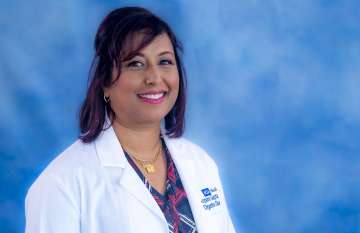
Co-Director, Goodman-Luskin Microbiome Center
Director, Goodman-Luskin Microbiome Center Neuroimaging Core
Director, Goodman-Luskin Microbiome Center, Obesity, Metabolic Disorders and Eating Behaviors Research Program
Associate Professor
Vatche and Tamar Manoukian Division of Digestive Diseases
David Geffen School of Medicine at UCLA
Dr. Church is an associate professor at UCLA, where she investigates how the brain, gut microbiome, and environment interact to shape health across the lifespan. She earned her PhD in psychology and completed an APA-accredited clinical internship at Massachusetts General Hospital/Harvard Medical School.
Dr. Church's research focuses on understanding how environmental factors, including diet, social adversity, and neighborhood conditions, interact with biological systems such as the brain, gut microbiome, immune system, and metabolism to influence stress-related disorders, including obesity, cognitive decline, and other chronic diseases. Using a systems biology approach, she integrates advanced neuroimaging, microbiome science, metabolomics, nutrition, and immunology to uncover the complex mechanisms linking environmental exposures to brain and metabolic health.
Her research aims to identify early biological markers of disease risk and resilience, particularly among populations disproportionately affected by social and environmental disadvantages. By defining the biological pathways through which the environment influences health, her work seeks to inform precision prevention strategies and develop microbiome-based interventions that promote healthy aging, metabolic health, and brain resilience.
Dr. Church currently leads multiple federally and industry-funded research programs, including grants from the National Institutes of Health. She has received numerous research awards, authored more than 100 peer-reviewed publications, and is an internationally recognized expert on the brain-gut-microbiome axis. She frequently provides expert commentary on the role of the gut microbiome in health and disease and was featured in the Netflix documentary Hack Your Health: Secrets of Your Gut.
Jonathan P. Jacobs, MD, PhD
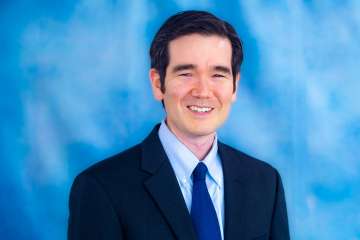
Co-Director, Goodman-Luskin Microbiome Center
Director, Microbiome Core, Goodman-Luskin Microbiome Center
Associate Professor-in-Residence
Vatche and Tamar Manoukian Division of Digestive Diseases
David Geffen School of Medicine at UCLA
Dr. Jacobs graduated magna cum laude with highest honors from Harvard University with an AB in biochemistry. He subsequently received his MD from Harvard Medical School, graduating magna cum laude in a special field. During college and medical school, he trained in the laboratory of Diane Mathis and Christophe Benoist where he investigated the immunologic mechanisms of an autoantibody-mediated model of arthritis. This research was supported by a fellowship from the Howard Hughes Medical Institute. He completed a residency in internal medicine at Stanford University then joined UCLA as a gastroenterology fellow in 2010. He pursued additional scientific training at UCLA through the Specialty Training and Advanced Research (STAR) program under the mentorship of Jonathan Braun. He was awarded a PhD in cellular and molecular pathology in 2015 for his research on the intestinal microbiome and afterwards joined the UCLA Division of Digestive Diseases faculty. He established the UCLA Microbiome Core in 2016 - which provides a comprehensive suite of microbiome-related services to support microbiome research by the UCLA scientific community - and is now co-director of the Goodman-Luskin Microbiome Center.
Dr. Jacobs’ research explores the role of intestinal microbes in the development of inflammatory bowel disease (IBD), obesity, and other disorders. This involves a translational approach that includes detailed characterization of patients’ microbiome by sequencing and metabolomics as well as modeling of the effect of disease-associated human microbial communities in humanized gnotobiotic mice (i.e. germ-free mice colonized with human microbiota). He has published over 140 original research articles and reviews in scientific journals including Gut, Gastroenterology, Clinical Gastroenterology and Hepatology, Microbiome, Gut Microbes, Genome Medicine, The ISME Journal, Cellular and Molecular Gastroenterology and Hepatology, and Proceedings of the National Academy of Science. His ongoing projects employ animal models and multi’omics analysis of patient cohorts to define the role of IBD-associated genes in shaping the intestinal microbiome and to identify microbes and microbial products that promote IBD and obesity.