
Labs
Explore our faculty's research labs within the UCLA Division of Endocrinology:
Abel Lab
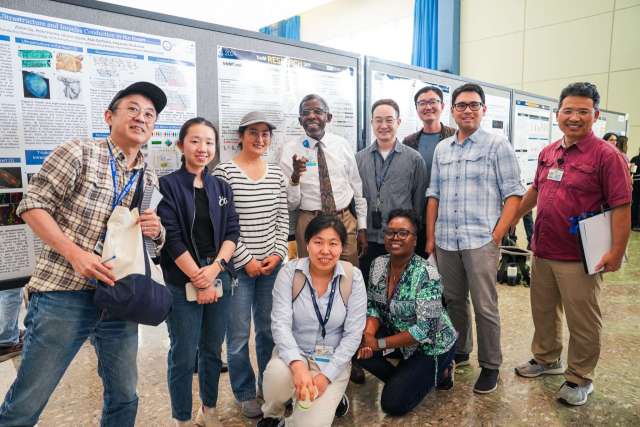
The laboratory focuses in understanding the molecular mechanisms that are responsible for cardiovascular disease in obesity, type 2 diabetes, and type 1 diabetes. Its recent research focus includes novel metabolic signals that contribute to heart failure, contributions of altered mitochondrial dynamics to cardiometabolic disease, and mechanisms linking insulin resistance and cardiometabolic disease, mitochondrial mechanisms for sex differences in cardiometabolic disease.
To learn more, visit: Abel Lab

Everett Lab
The Everett Lab is dedicated to advancing diabetes care through innovative clinical and health services research. A major focus of our work is improving access to and effective use of diabetes technologies, such as insulin pumps and continuous glucose monitors (CGMs), particularly among populations at high risk for poor diabetes outcomes. The lab studies how these technologies are used in real-world settings and identifies factors that support or hinder their adoption. Our research is multifaceted, spanning the impact of healthcare policies to the psychosocial and behavioral aspects of diabetes management. Through this work, we design and evaluate interventions to improve outcomes for individuals with poorly controlled type 1 and type 2 diabetes. Based at UCLA, the Everett Lab takes a multidisciplinary approach and partners with community health centers, academic institutions, and patients to drive meaningful, data-driven improvements in diabetes care.
To learn more, visit: Everett Lab
Lechner Lab
The Lechner lab focuses on the balance of immune activation and immune tolerance. The lab studies how autoimmunity arises from loss of tolerance or inhibition of natural regulatory pathways or checkpoints. On the other hand, it aims to leverage immune responses and reverse tolerance to enhance anti-tumor immunity. As a physician-scientist, Dr. Melissa Lechner's research seeks to address the most pressing clinical questions and evolve with the needs of patients
To learn more, visit: Lechner Lab
Heaney Lab
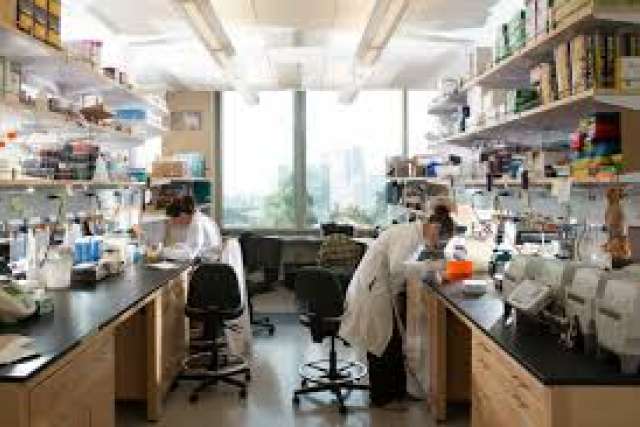
The Heaney lab's primary areas of clinical and research interest include the pathogenesis of pituitary tumors and the exploitation of novel molecular targets to develop innovative treatments for pituitary and other neuroendocrine tumors.
To learn more, visit: Heaney Lab
Hevener Lab
Dr. Hevener’s laboratory has made important advances in our understanding of estrogen action and estrogen receptor (ER) biology in metabolic tissues. Her research is focused on understanding the tissue-specific target genes of action, as well as the cellular processes controlled by ERs. Much of her research has shown that ERalpha plays a critical role in mitochondrial remodeling, oxidative metabolism, and quality control. Dr. Hevener’s research team interrogates the impact of ERalpha loss and gain of gene expression in a variety of cells and tissue types, including skeletal and cardiac muscle, adipose tissue, immune cells, and liver. Her laboratory has determined how impairment of estrogen action contributes to cardiometabolic diseases and certain forms of cancer, and has identified the beneficial effects of heightened ERalpha action in combating metabolic dysfunction and diet-induced insulin resistance. Similar to this work, her team has advanced the fundamental understanding of the molecular mechanisms that underlie the metabolic health benefits of daily physical activity.
To learn more, visit: Hevener Lab
Shirihai Lab
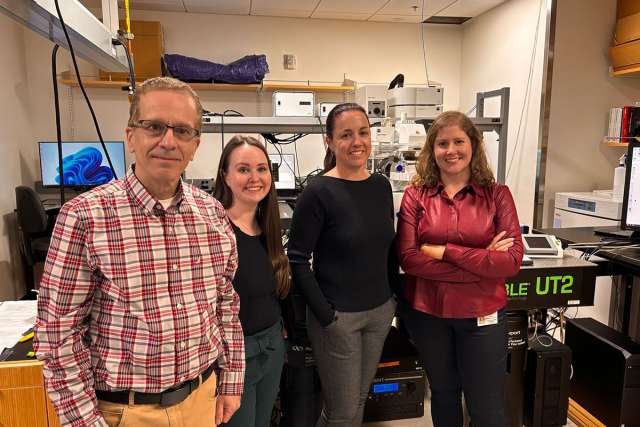
The Shirihai lab is studying organellar biology with a focus on mitochondria, lysosomes and autophagosomes in the context of obesity and diabetes. In the past fifteen years the lab has focused on the study of the roles of mitochondrial dynamics in quality control, fuel preferences and energy expenditure. The lab is known for the development of key imaging approaches that allow for the quantification of mitochondrial dynamics, motility, mitophagy and turnover. Using these methodologies to study mitochondrial dynamics we described the life cycle of the mitochondria and the role of continuous fusion and fission dynamics in the maintenance of bioenergetic capacity and efficiency in the pancreatic beta cell. The lab played a pivotal role in the development of cutting edge technology for high throughput respirometry in collaboration with Seahorse Bioscience which lead to the development of higher throughput approaches for islet respirometry. The lab has provided training to over 80 different groups in the application of bioenergetics studies such as Respirometry and imaging. The lab has sustained active and fruitful collaborations with biotech and pharma over the years, in projects involving drug discovery as well as research and medical device development. The lab has trained over 14 postdoctoral fellows, of which six have been recruited as faculty in academic institutions, and two are founders of new biotech companies. Since 2016 I serve as the director of UCLA Metabolism Theme which facilitate team work and enable research by providing tools guidance to the members of the UCLA metabolism research community.
To learn more, visit: Shirihai Lab
Tudzrova Lab
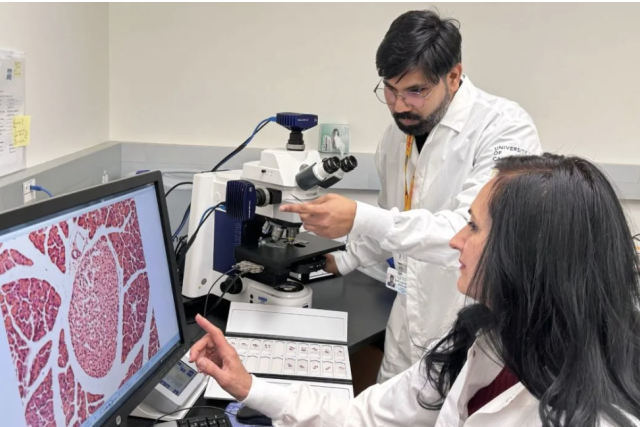
The Tudzarova lab explores the role of transient glycolysis in the proliferative cell cycle of pancreatic beta cells and induced pluripotent stem cells (iPSC) with emphasis on the translation of the mitochondrial dynamics and cellular bioenergetics to DNA replication initiation. Dr. Tudzarova-Trajkovska recently identified the origin of the activation checkpoint (OAC), which monitors the activation of replicative origins and is sensitive to reduced CDC7 levels. OAC critically relies on multiple regulatory axes coordinated through the Forkhead transcription factor FoxO3a. SILAC-based high-resolution MS proteomics showed that the arrested phenotype of normal fibroblasts involves active rather than passive cellular and metabolic adaptation, and that the Cdc7-depleted proteome maintains cellular arrest by initiating a dynamic quiescence-like and catabolic response that promotes cellular survival. OAC's reliance on several tumor suppressor proteins commonly inactivated in human tumors provides a strong mechanistic basis for the differential killing of tumor versus normal cells after CDC7 inhibition/downregulation. The therapeutic targeting of the DNA replication initiation machinery thus constitutes one of the focuses of her research.
To learn more, visit: Tudzarova Lab