News
UCLA Research Leads to World’s First Robotic-Assisted Cataract Surgery
Horizon Surgical Systems
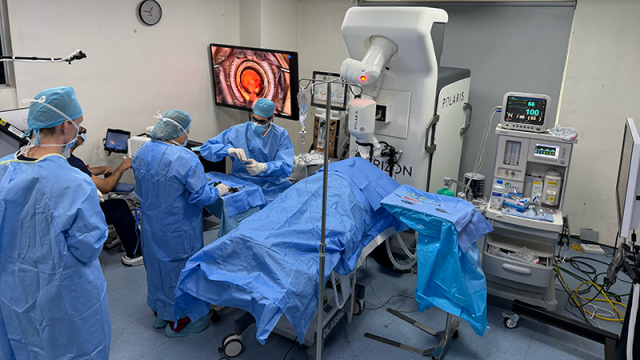
Dr. Uday Devgan at the surgical cockpit, assisted by Dr. David Lozano Giral, performing the first human robotic cataract procedure as part of Horizon’s clinical study
Dec 3, 2025
UCLA Samueli Newsroom
A surgical robotics system developed by UCLA engineers and physicians has achieved a major breakthrough in ophthalmic surgery. Horizon Surgical Systems, a UCLA spin-off that licensed the technology, successfully completed the world’s first human clinical trial of robotic-assisted cataract surgery.
Cataracts — clouding of the eye’s natural lens that can lead to vision impairment and ultimately blindness if left untreated — affect approximately 94 million people worldwide. The condition remains the leading cause of global blindness, accounting for about 33 percent of all blind people. Cataract surgery is often cited as the most frequently performed surgery in the world, with more than 26 million procedures a year worldwide. Traditional cataract surgery, while common, poses significant challenges for surgeons, requiring visualization of transparent ocular tissues and extreme precision due to the small (few microns) dimensions of the anatomical structures.
Horizon Surgical Systems announced Oct. 8 the results of its first-in-human study in which 10 patients successfully underwent robotic-assisted cataract surgery for the first time in the world with no adverse events. Dr. Uday Devgan, a former professor of ophthalmology, and Dr. David Lozano Giral, an assistant clinical professor of ophthalmology and a director of Ocular Trauma service, at the Jules Stein Eye Institute at UCLA, performed the surgery, marking a historic milestone in ophthalmic surgical robotics.
As part of the study, each patient received a standard cataract operation — removal of the clouded natural lens followed by implantation of an artificial lens — with the Polaris robotic platform. The surgeon sits at a surgical cockpit located in the operating room and controls the instruments inside the eye. The cockpit incorporates a specialized input device that provides real-time augmentation, guidance overlays and tactile paddles while the surgeon views a 3D monitor displaying ocular anatomy captured through multimodal imaging systems. Surgical robotic arms, attached to a cart near the patient’s head, use interchangeable microsurgical tools attached to the robotic system to make small corneal incisions and remove the cataract-affected lens. The surgeon then implants a clear, patient-specific artificial lens to restore 20/20 vision.
The breakthrough represents more than a decade of multidisciplinary collaboration between engineers at the UCLA Samueli School of Engineering and physicians at the UCLA Stein Eye Institute that was funded in part by multiple National Institutes of Health awards. After more than 15 years of incubation, Horizon was co-founded in 2021 by four current and former UCLA faculty members, including Jacob Rosen, a professor of mechanical and aerospace engineering and bioengineering and director of the Bionics Lab, Tsu-Chin Tsao, a distinguished professor of mechanical and aerospace engineering and director of the Mechatronics and Controls Laboratory, Dr. Jean-Pierre Hubschman, a former professor of ophthalmology at UCLA and founder and former director of the Advanced Robotic Eye Surgery Laboratory and Dr. Steven Schwartz, former chief of the Retina Division at the UCLA Stein Eye Institute. Many of Horizon’s employees are former graduate students of the company’s UCLA founders.
In a recent preprint titled “High‑Precision Surgical Robotic System for Intraocular Procedures,” Rosen, Tsao and Hubschman report that laboratory testing demonstrated a tooltip accuracy of 0.053 millimeters, highlighting the technology’s potential to improve safety and consistency in complex eye surgeries, including cataract procedures.
Rosen attributes the breakthrough to two duos: one focused on disciplines and the other on institutions. From a disciplinary perspective, medicine is a problem-rich environment, while engineering is a solution-rich one. Combining them enables development of relevant and innovative technology. From an institutional perspective, academia provides an intellectually rich setting where researchers can refine both their scientific and technological approaches as well as intellectual property. Industry, in contrast, is fast-paced, emphasizing rapid design cycles to drive toward a finished product.
“Horizon is the result of the privilege of operating within both sides of these duos,” Rosen said. “The professional journey of all of Horizon’s founders — from a concept sketched on a napkin to embracing the first patient who underwent the first robotic cataract procedure — was profoundly meaningful and deeply impactful.”
The robotic technology was licensed to Horizon through UCLA’s Technology Development Group, which manages the university’s intellectual property and helps bring innovations from the lab to the marketplace.
“This milestone demonstrates the strength of UCLA’s innovation ecosystem, where cutting-edge engineering, medical expertise and entrepreneurial support come together to improve lives,” said Amir Naiberg, associate vice chancellor and president and CEO of UCLA Technology Development Group. “Horizon’s success underscores the critical role of university technology transfer in advancing both science and patient care.”
The completion of the first clinical study marks a pivotal step in the clinical regulatory process toward broader adoption of robotic-assisted ophthalmic surgery. Horizon is continuing to refine the Polaris system and plans to pursue additional clinical studies and regulatory approval.
UCLA Fielding's Dr. Anne Coleman leads team researching how cardiovascular risk score predicts multiple eye diseases
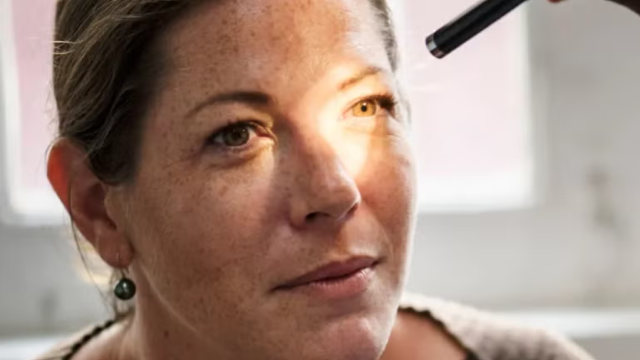
Research led by UCLA Fielding's Dr. Anne Coleman, professor in the Department of Epidemiology, may predict vision-threatening conditions.
Delaying Ophthalmic Care May Boost Psychosis Risk
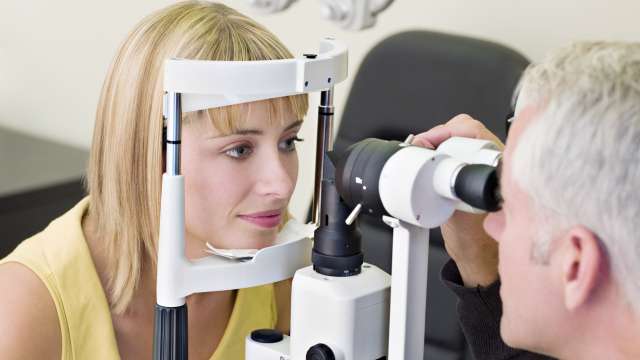
In analysis of nearly 121,000 older patients with glaucoma, those who received delayed eye care had significantly greater risk for the development of brief psychotic disorder, delusional disorder, or schizoaffective disorder.
Vision-saving eye surgery may also improve survival in patients with rare eye cancer, study finds
Unique technique combining radiation with silicone oil shows unexpectedly low rates of cancer metastasis and death in patients with uveal melanoma
Protecting Your Eyes from Post-Wildfire Debris and Exposures: Expert Advice

Wildfire ash and windblown debris can cause irritation, discomfort, and potentially harmful impacts on the eyes. As waste removal and reconstruction in the burn areas begin, potential toxic microparticles can become airborne. Burn debris can contain heavy metals, microplastics, and other toxins from manmade materials. Furthermore, with recent rainfall in the area, residual ash can contaminate water runoff. Understanding the risks to your ocular health is important for taking steps to prevent damage to your eyes.
The primary risk to eye health is ash or toxic dust potentially landing in the eye or tear film, which could cause an abrasion on the surface of the eye or a corrosive injury. A gritty, sandy sensation, eye irritation, eye redness and blurred vision could all be symptoms of potential eye injury.
Protective Measures
- Limit outdoor exposure – Stay indoors when air quality is poor and winds are strong.
- Wear protective eyewear – Consider wearing safety glasses or wraparound sunglasses to shield your eyes from windblown ash and dust while outdoors.
- Use artificial tears – Use preservative-free artificial tears every few hours while outdoors to flush out any potential toxins. If any debris enters your eye, rinse it out as quickly as possible with clean water.
- Avoid water runoff – Limit ocean swimming or surfing and wear goggles if submerging underwater due to potential contaminants.
Long-term exposure to airborne pollutants, including particulate matter from wildfire debris, remains of concern. If you live adjacent to or near a burn area, reduce contact with hazardous material and wear protective gear.
If you experience persistent eye irritation, redness, or vision change, our ophthalmologists and optometrists are here to help you at one of our UCLA Ophthalmology clinics in Westwood, Santa Monica, Calabasas and Pasadena.

Amanda J. Lu, MD
Health Sciences Clinical Assistant Professor
Comprehensive Ophthalmology
UCLA Stein Eye Institute

Novel procedure helps treat renowned chef’s rare eye cancer
Minimally invasive approach gives a better treatment option to patients with metastatic uveal melanoma who have liver metastases that cannot be surgically removed.
Treating a Cosmetic Iris Implant Recipient
There are several companies in the field of artificial irises. Kevin M. Miller, MD, and Sathish Srinivasan, MD, discussed the available products and important considerations when working with artificial irises.
Research explains how eyes see continuously in bright light
A study by researchers from the UCLA Jules Stein Eye Institute describes a molecular pathway that helps our eyes see continuously in bright light. The findings help answer a longstanding question about mammalian vision: Why don’t our eyes become less sensitive when they’re bombarded with bright light? The research, conducted in mice, reveals that a special molecule, which uses sunlight itself, rapidly recycles visual pigments after the pigments sense light and change structure.

5 Steps to Lower Your Risk of Eye Disease
By age 65, one in three Americans will have a vision-impairing eye disease. Many sight-robbing conditions can be effectively treated if detected early enough, in many cases limiting or eliminating the damage to eyesight. During the month of May, the join the in sharing valuable information about how to take care of your vision.
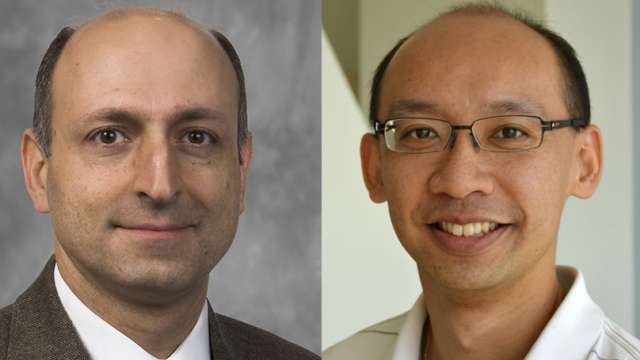
Interdisciplinary UCLA team wins funding for laser eye research
An interdisciplinary team of UCLA engineers and medical professionals has won an award from the UCLA Innovation Fund for their work in advancing efforts to image structures of the eye using lasers. The endeavor is a collaboration between Kouros Nouri-Mahdavi, an assistant professor of ophthalmology in the glaucoma division of the UCLA Jules Stein Eye Institute, Chee Wei Wong, professor of electrical and computer engineering in the UCLA Samueli School of Engineering, and Jinghui Yang and Yoon-Soo Jang, two research scientists in Wong’s lab.
What Does an Ophthalmologist Do?
A UCLA Doctor Explains
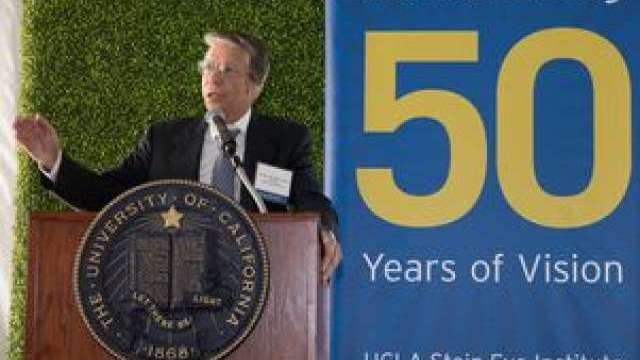
Jules Stein Building reopens after $65M renovation to expand vision-science campus
The marked its 50th anniversary and the reopening of the Jules Stein Building, recently renovated to create a state-of-the-art facility to advance UCLA’s work in the field of ophthalmology.

A Legacy for Loved Ones
Jules Stein Pioneering Revolutionary Approach to Retinal Degeneration