
Hundreds of red and blue T-shirts hang from a clothesline stretched across the grass near UCLA Santa Monica Medical Center.
The colorful display belies the tragedy behind it: each T-shirt bears unique artwork created by a survivor of sexual assault.
For more than 25 years, the Rape Treatment Center has participated in the Clothesline Project, a national, grassroots effort to raise awareness about sexual assault and provide a creative healing outlet for survivors. The exhibit will be on view April 15 to 17.
Nearly half of women and more than one in six men experience sexual violence in their lifetimes, according to the U.S. Centers for Disease Control and Prevention. At least one in four girls and one in 20 boys experience sexual abuse — almost always perpetrated by someone they know, the CDC says.
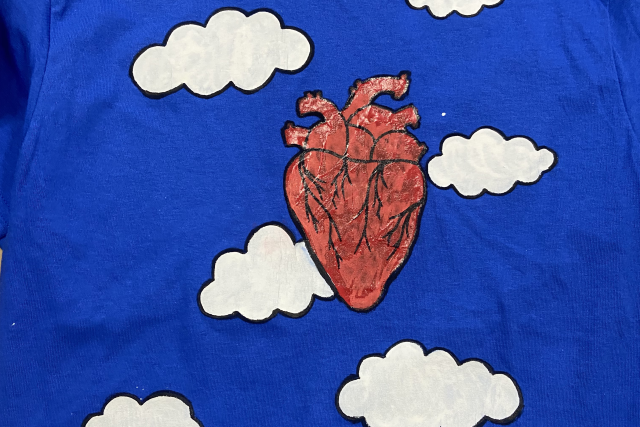
For E.M., who experienced sexual assault as a child, creating a T-shirt for the Clothesline Project allowed her to express feelings she couldn’t put into words.
“With trauma like that, I feel like the go-to strategy is: I’m just going to pretend I don’t have these feelings right now … I’m just going to go about my day and pretend like nothing’s wrong,” says E.M., now 18. “Art was a way I could express myself without having to necessarily use my words ... . It helped me process my feelings without being super uncomfortable.”
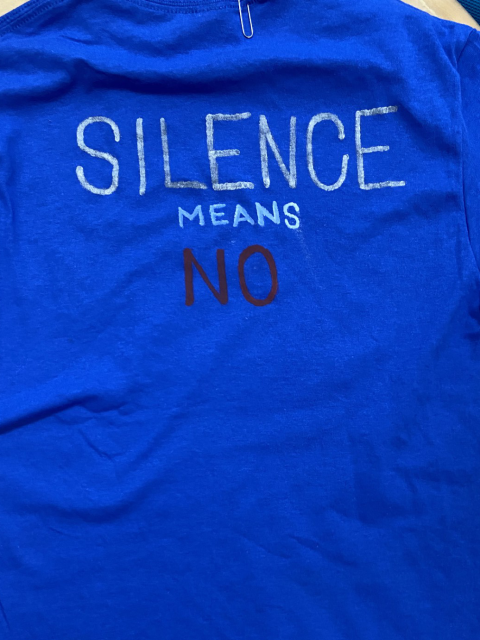
E.M. made her shirt last year with the support of Sofia Garcia, LCSW, a therapist at Stuart House. A program of the Rape Treatment Center, Stuart House is a child advocacy center, internationally recognized as a model for the treatment of children reporting sexual abuse, providing acute medical care, therapy, forensic support and other services for young people and their families.
Garcia has worked with dozens of children to create T-shirts for the Clothesline Project, which has meaningful therapeutic value beyond the artwork itself, she says.
“It's a safe space for our clients to really express themselves and have others bear witness to their inner thoughts, their emotions, their story,” Garcia says. “And it’s this tangible object that lives on even after therapy ends.”
Painting feelings
Art therapy is already a part of Stuart House’s offerings, but participating in the Clothesline Project is another way for survivors to use creativity to express their feelings, she says. It also offers an opportunity to share their creations with other survivors and the broader community.
Based on a child’s emotional readiness, Stuart House therapists may introduce them and their parents to the concept and invite them to make their own T-shirt. Shirts are typically created over multiple therapy sessions, Garcia says, using paint, puff paint and markers.
Therapists offer prompts to kickstart the creative process. One side of the shirt tends to focus on expressing pain and trauma, Garcia says, and the other centers on the survivor’s strength, resilience and hope.
Sometimes she invites a child to consider what they would say to their abuser. Kids are allowed to use “curse words” in that case, she says. This prompt can often lead to other interventions, she adds, such as a child writing a letter to their abuser — something they might read aloud to their therapist before tearing it to pieces.
Garcia often asks what a child might say to others who’ve experienced the same kind of trauma.
“The theme I notice is: You don’t have to keep this a secret; keep telling until someone believes, and it will be OK,” she says. “It gives the child this opportunity to come from a place of wisdom — wisdom from their own experience — and be an agent of help and support for others.”
This is particularly meaningful because sexual assault is so isolating, she says. No one wants to talk about it. The Clothesline Project began in 1990 as a way to bring sexual violence out of the shadows.
Creating community
Seeing the shirts displayed — 475 will be on view in Santa Monica — offers tangible evidence of the prevalence of sexual assault.
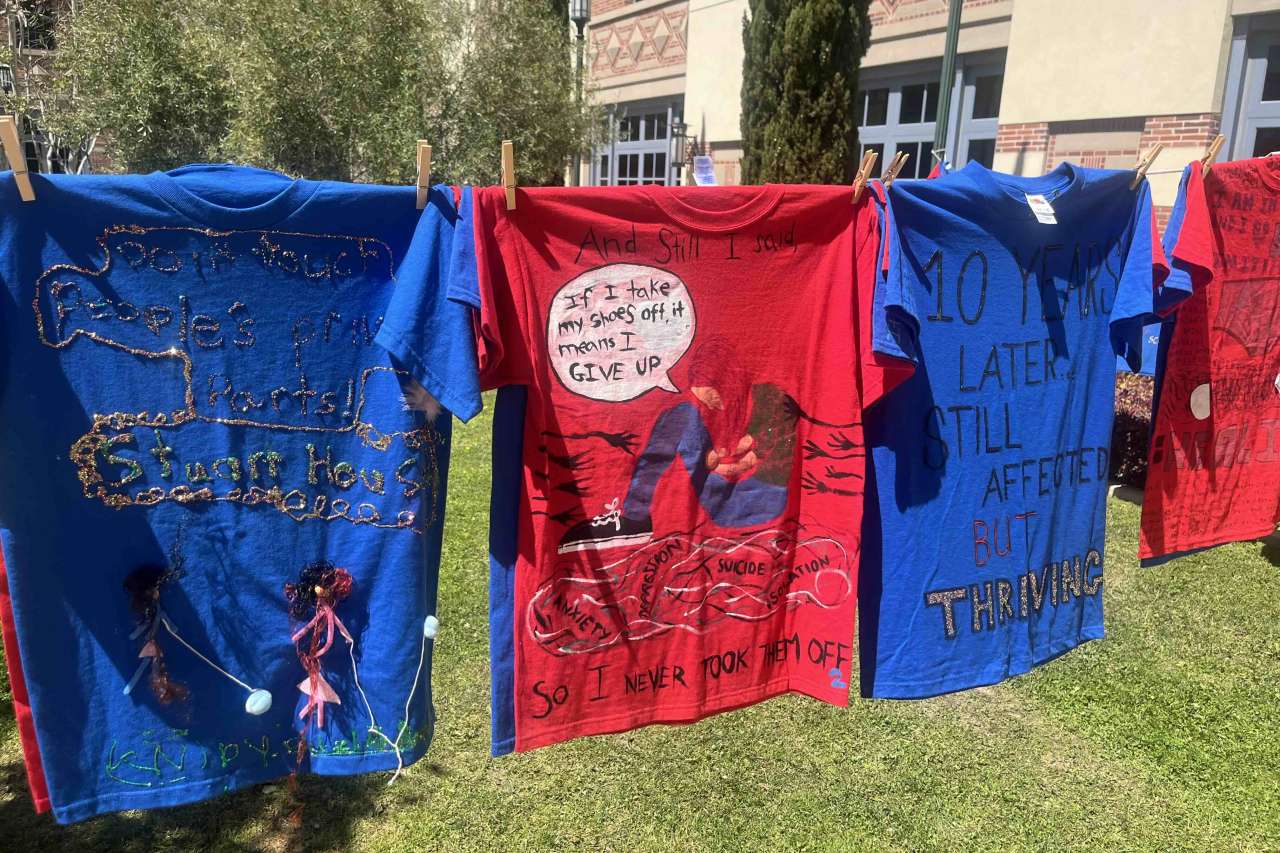
For E.M., the exhibit has been a powerful reminder that she’s not alone.
“I remember seeing some that were from kids that were really young,” she says. “You don’t want to see that. But it does kind of help you feel less alone, like there’s a lot of other people who have also experienced this.”
Garcia sometimes brings patients to view the exhibit. They feel proud to see their T-shirt hanging beside so many others, she says, and relate deeply to the feelings expressed by other survivors.
“It reduces this isolation,” she says. “It reduces this shame that they often carry or believe.”
It’s up to each child whether they want to share their shirt with their parents, she says. If they choose to, Garcia meets with the parent privately to assess how they might respond before hosting a family session where the child can explain their creation. A parent’s positive feedback helps support the child’s strength and self-esteem, she says, and reinforces the parent-child connection.
Parent and child looking at the Clothesline Project exhibit together also reinforces a trusting bond, Garcia says. It reduces a parent’s sense of isolation, too, seeing how many families are affected by sexual abuse.
“With child sexual abuse, we know it can really have an impact on the whole family system,” Garcia says. “We find it necessary and helpful to really work with these parents as well, especially if they have a history of their own sexual abuse — they're feeling triggered, they're feeling overwhelmed from their history, but also what their child is experiencing.”
Parents who are survivors of sexual abuse may seek their own counseling at the Rape Treatment Center. Some even make their own shirts for the Clothesline Project after seeing their child’s work.
For Garcia and other therapists at Stuart House and the Rape Treatment Center, the Clothesline Project is a vehicle for meaningful conversations and profound healing.
“All humans want to feel seen, understood and believed. And for our clients here, that's a necessity,” Garcia says. “I find it a beautiful opportunity for a child to reflect on their experience and take the time to put it into art or words, however they want to share it … . It’s a privilege and honor to see my clients heal and see them create their T-shirt.”