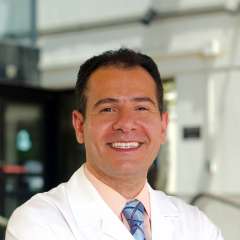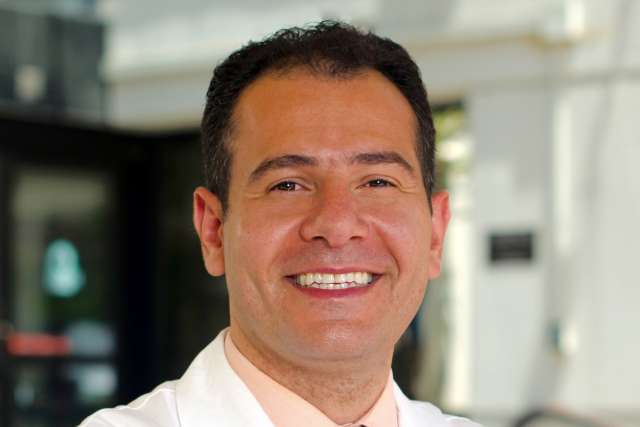
A multidisciplinary team led by Dr. Tamer Sallam, professor of medicine in the UCLA Division of Cardiology and director of the UCLA Center for Preventive Cardiology & Cardiometabolic Health, has received a grant of $7.8 million from the National Institute of Diabetes and Digestive and Kidney Diseases (NIDDK), a part of the National Institutes of Health (NIH). This High Impact, Interdisciplinary Science Award (RC2) will be used to launch the HERITAGE Study (Harnessing tandEm Repeats in MultI-Ancestry meTAbolic Gene-phenotype rElationships).
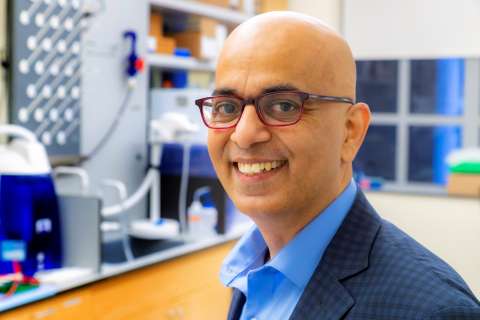
The project, co-led by Professor Wei Li from UCI, seeks to address one of the most persistent questions in metabolic disease research: why do known genetic risk factors explain only a small fraction of the inherited risk for diabetes and obesity?
Although genetics can account for up to 80% of an individual's susceptibility to these conditions, most of what makes people genetically prone to diabetes and obesity is still unknown. Researchers refer to this gap as “missing heritability.” The HERITAGE study will investigate whether an often-overlooked type of genetic variation in DNA, known as tandem repeats, short sequences that repeat a variable number of times throughout the genome, may hold important answers.
“Part of the missing heritability of diabetes and obesity may lie in places we haven’t looked closely,” said Sallam. “Tandem repeats are present in these datasets, but they have been difficult to analyze with existing tools. HERITAGE is designed to help make that variation easier to study.”
Building on recent discoveries by the research team, the investigators will analyze large-scale genomic datasets from hundreds of thousands of individuals to create one of the most comprehensive tandem repeat resources ever developed for metabolic disease research. By identifying tandem repeat variations associated with traits such as body mass index, blood sugar levels and diabetes risk across diverse populations, the team hopes to reveal previously hidden genetic contributors to disease and better understand why diabetes and obesity affect individuals differently across ancestral backgrounds.
Beyond advancing scientific knowledge, the investigators hope the resources generated through HERITAGE will accelerate discoveries across the field and help pave the way for more precise and equitable approaches to prevention and treatment.
The study represents a collaborative effort that brings together expertise in metabolism, computational biology, bioinformatics and population genetics. The study is co-led by Sallam and Dr. Wei Li, from the UCI. Other participating faculty include E. Dale Abel, MD (UCLA), Arleen F. Brown, MD (UCLA), Noel Burtt (Harvard), Ya Cui, (UCI) Mark O. Goodarzi, MD (Cedars), Andrea Hevener (UCLA), Jessica Li (University of Washington), Aldons Jake Lusis (UCLA), Peter Tontonoz, MD (UCLA), Karol E. Watson, MD (UCLA) and Qin Yang, MD (UCI).