When Connie Frank arrived as an undergraduate student at the University of Illinois, she dreamed of becoming a doctor. During the trial period of her first college chemistry class, however, Frank got cold feet. She dropped the course, abandoned her plans to study medicine and earned a degree in English instead.
“When I look back on it now, I am really not sure why I didn’t pursue it,” Frank said. “For many years, I had great regret about that.”
Nevertheless, Frank succeeded in helping countless patients — not as a physician but as a philanthropist and health care advocate who has given millions to causes ranging from kidney transplantation to bone diseases.
“It’s been pointed out to me by friends and doctor–friends that what I’m doing in my philanthropy is as much or more than if I had become a doctor,” Frank said. “I hope I have impacted a lot of patients’ lives and a lot of doctors’ lives, too.”
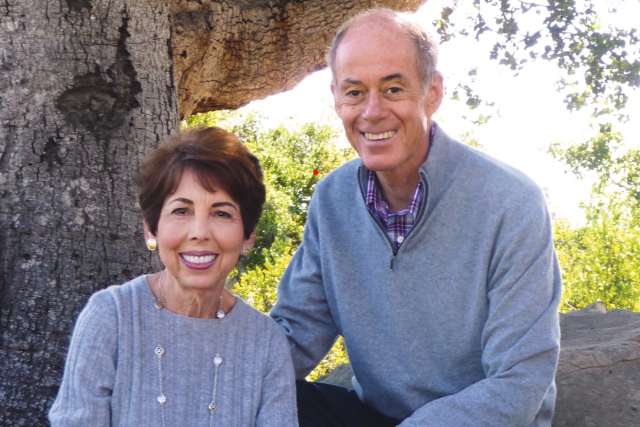
Most recently, Frank and her husband Evan Thompson made a transformative gift to immune tolerance research at UCLA Health. Their investment will advance the quest to eliminate immunosuppressant medications for organ transplant recipients.
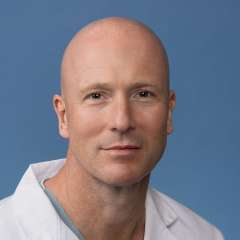
Frank and Thompson are longtime supporters of the university and Jeffrey Veale, MD (FEL ’06), professor of urology and director of the Kidney Transplantation Exchange Program at the David Geffen School of Medicine at UCLA.
Dr. Veale is overseeing a clinical trial that achieves immune tolerance by infusing transplant recipients’ bodies with stem cells from their organ donors. The protocol tricks the immune system into accepting the transplanted organ so that the recipient can live without antirejection drugs.
Dr. Veale first approached Frank and Thompson with his vision for immune tolerance in 2019. His progress and enthusiasm, combined with their commitment to improving quality of life for transplant recipients, motivated the pair to get involved.
“I think Dr. Veale did one or two immune tolerance cases which were successful, and he was quite energized by the promise of what could happen,” Thompson recalled. “So, we said, ‘OK, we’re on board. Tell us what you have to do to make this a viable program.’”
“This research was no longer just pie-in-the-sky theory,” he added. “He had actually done it.”
Antirejection drugs have many potential side effects that can cause cancer, infections and heart disease, and over time these drugs may also damage the transplanted organ.
The UCLA team continues to pioneer new ideas to improve immune tolerance. They are revolutionizing the field of transplant medicine and plan to offer this immune tolerance protocol to liver, lung and heart transplant patients in the future.
“In addition to Dr. Veale’s role as a transplant surgeon at UCLA, we think of him as a visionary and an innovative force capable of changing the transplant experience for patients,” Frank said. “Just think of all the people who are alive because they have received a kidney, lung, heart or liver transplant.
“That in itself is an amazing thing that medicine can stand up and applaud themselves for; however, it is important to look at what is being done and to see how we can do it better.”
After seeing the immune tolerance program’s profound impact on the field of kidney transplantation, Frank and Thompson — who established the Connie Frank Kidney Transplant Center at UCLA Health in 2015 — were attracted to the idea of expanding efforts to incorporate other organs as well.
“Kidney transplants have certain aspects that make it a more likely success,” Thompson said. “But the promise, which is mind-boggling, goes well beyond kidneys. And that’s one of the things about Dr. Veale. His vision is unlimited — but not in an unreasonable way.”
While collaborating with Dr. Veale on multiple projects, Frank and Thompson have developed a close bond with the transplant surgeon. They have agreed to help fund his immune tolerance studies for at least five years.
“I’m so thrilled to be partnering again with Connie and Evan — two brilliant people with such a deep passion and respect for this work,” Dr. Veale said. “Thanks to their generosity, we have the potential to free countless people from the lifelong burden of these immunosuppression drugs.”
In terms of direct involvement, Frank explained that their main job is to provide emotional and financial support for the doctors and scientists delivering these vital services.
Faculty have been known to seek their expertise in other areas as well. Frank’s keen eye for design elevates every health care facility she touches, while their collective business acumen has helped researchers keep resource management top of mind.
“The budget is really important,” Thompson said. “One of the most significant reasons why startups fail is because … they just don’t have the money to provide all the services that they need in order to make that idea work, or they run out of money too soon because it takes longer than they anticipated to succeed.”
Frank and Thompson are hopeful that the results of this clinical trial will empower other health care professionals to make further improvements and discoveries in their respective disciplines.
“That’s the history of medicine,” Thompson said. “That’s what happens. And I think that’s going to happen here too.”
Johnese Spisso, MPA, president of UCLA Health, CEO of the UCLA Hospital System and associate vice chancellor of UCLA Health Sciences, credited Frank and Thompson for the pivotal role they have played in transforming the field of organ transplantation.
“I cannot overstate the value of their phenomenal service to this institution and the health care community at large,” Spisso said. “This meaningful contribution will continue to uplift medical leaders and enhance the lives of patients for generations to come.”
If she could travel back in time, Frank would tell the college freshman who dropped her chemistry course that there are many paths, and the one she ended up taking “worked out just fine.”
“I am pleased that Evan and I have supported a variety of projects that have improved the patient experience,” Frank said. “There’s a certain amount of pride in knowing that I am able to help people who I may never meet.”