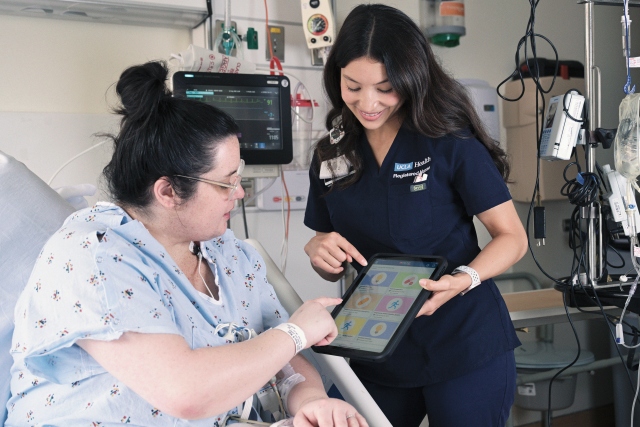
With the nation’s diverse population in mind, health care systems are recognizing the importance of providing patients with simple, easily understood and culturally appropriate directions for care. To that end, a nurse-led Organizational Health Literacy workgroup was formed to create a cohesive strategy to enhance screening, improve patient experience, and better identify and meet language and disability needs.
The workgroup was initiated in mid-2023, leading to the formation of four subgroups comprising diverse stakeholders that include nurses and other clinicians, as well as representatives from language services, patient experience, health equity, data analytics and informatics.
The workgroup’s current goals include:
- Improved trust in the health care system leading to earlier care-seeking behavior
- Reduced readmissions with improved patient satisfaction. Patients will feel “seen and heard” with recognition of their individual and cultural needs.
Identifying a Need
David Bailey, PhD, MBA, RN, CCRN, NEA-BC, FACHE, FAONL, FAAN, chief nursing officer of the UCLA Santa Monica Medical Center, is the executive sponsor and co-leads the Health Literacy workgroup with Patricia Alberto, MPH, BSN, RN, CPHQ, strategy and program manager for systems quality, readmissions and care transitions.
Dr. Bailey says his understanding of health literacy and its importance have developed significantly through his experience leading the group. His “ah-ha” moment came during rounds one day, he says, when a nurse shared that Vietnamese American patients have the highest readmission rates due to language barriers — highlighting a clear and specific example of the impact of limited English proficiency. He walked away from that encounter with a deeper understanding of how critical it is for team members to connect with patients in ways that resonate with them — and how challenging it becomes to build trust when that connection is missing, both with patients and their support systems.
He points to the lengthy discharge documents that are not in patients’ native languages, which often causes patients to misunderstand medication instructions, leading to potential errors in how they take their medications.
“If you can’t meet a patient or their family or their support group where they are, whether it’s in their language or their culture or in their community, it doesn’t work,” Dr. Bailey says. “They’re not going to know what to do to take care of themselves” after discharge.
Kemi Reeves, DNP, MBA, GNP-BC, associate director of the UCLA Alzheimer’s and Dementia Care Program, director of Nursing Health Care Equity and a member of the workgroup, echoes those thoughts. She says understanding instructions such as medication and diet changes or making follow-up appointments is critical to patient outcomes.
“All of these complex factors can determine whether someone has a successful rehabilitation, requires rehospitalization, or needs a longer rehab stay,” she says.
Readmissions
UCLA Health readmissions data shows that approximately 46% of readmissions are flagged for poor health literacy and about 65% are flagged for problems with medications, which is often a health literacy issue, Dr. Bailey says.
And health literacy doesn’t end with just language, he notes. A systemwide, centralized process must be developed for materials that are not only culturally appropriate but are simple to follow, including for patients with disabilities, he says, and are written at a fifth-grade comprehension level.
Dr. Bailey emphasizes the magnitude of the project: “Educating our patients means every piece of paper that we hand them has to be the same, and we, as an organization, still have a long way to go.”
Below are the four workgroups with highlights of their work and key goals:
Health Literacy Education
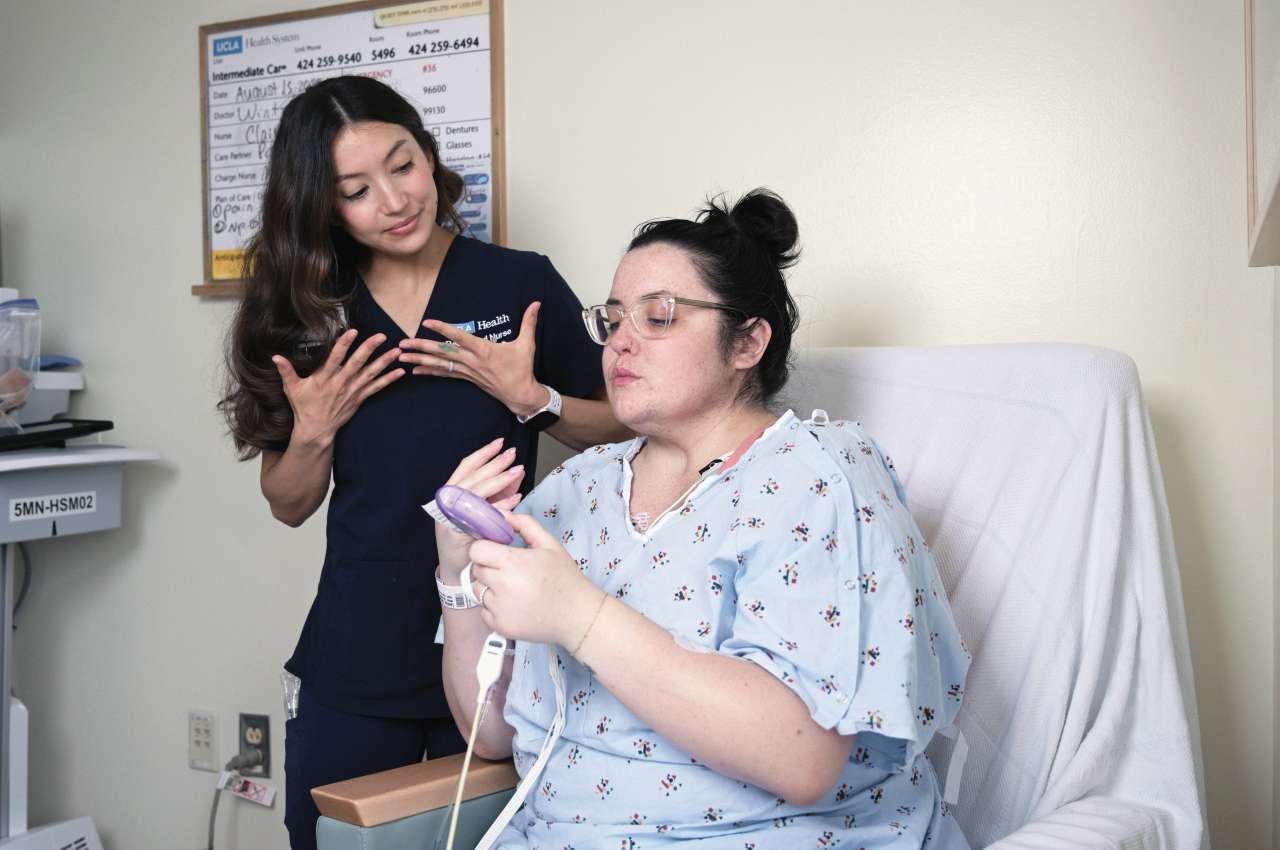
This workgroup is focused on training staff on health literacy strategies, starting with the largest workforce — nurses.
A nursing education video is in development, scheduled for release in 2025, that targets all nurses systemwide. The video is designed to be broad-based, not just acute-care focused, ensuring consistent education across all settings.
Education for all other disciplines will be rolled out by summer of 2026.
Health Literacy Screening, Data and Dashboard Development
This workgroup, led by Adam Gushansky, business intelligence analyst, and Sujan Silakar, business intelligence manager, aims to present data visualizations that illuminate key issues and guide efforts to improve outcomes for patient populations with low health literacy.
“The goal is to analyze these variables and identify where the process measures we’re currently developing can be applied to further reduce readmission rates,” Silakar says.
Key work completed and ongoing initiatives include:
Implementation of the Single Item Literacy Screener (SILS-2): The question “How comfortable are you filling out medical forms by yourself?” was added to the inpatient admissions process to identify patients with low health literacy.
Development and launch of a Tableau dashboard: Introduced in April 2025, the dashboard overlays SILS-2 responses with critical outcomes such as hospital readmissions, mortalities and medication-related issues within the low health literacy population.
Dashboard features and data analysis: The tool offers granular patient data alongside high-level outcome views, with monthly updates to monitor trends and assess intervention effectiveness. Data is further broken down by Social Vulnerability Index quartiles and includes specific metrics such as medication-related problems upon readmission.
Future enhancements: Planned developments aim to incorporate co-learner data, learning barriers and patient preferences to improve targeted interventions.
Gushansky believes continued emphasis on health literacy will be critical in coming years.
“The data we’re sharing through the dashboard — paired with targeted interventions — has the potential to significantly improve patient care across the system,” he says. “And it will also help promote evidence-based practices for all these groups, as well.”
Improved Language and Disability Identification
Led by Marlon Duarte, director of Language and Hospitality Services, this workgroup focuses on identifying Limited English Proficient (LEP) patients and those with communication disabilities, ensuring appropriate interpreter and translation services.
Primary goals include:
- Ensuring all patient education materials are written at a fifth-grade reading level for accessibility.
- Ensuring materials are translated after health-literacy vetting to maintain appropriate reading level.
- Standardizing identification of patients with limited English proficiency or communication disabilities during admission — either in CareConnect or through visual indicators for the care team.
Duarte gave an example in which translation errors can have serious consequences: The English word “once” is spelled the same as the number 11 in Spanish. Reading that, a Spanish-speaking patient might assume his medication is to be taken 11 times a day, Duarte says, highlighting the need for careful vetting and translation.
Patient Experience Question Development
Led by Director of Patient Experience Philip Loos, this workgroup’s primary goal is to ensure patients receive and understand written and verbal information delivered by health care providers. Their work
has included:
Leading a comprehensive survey analysis across all patient touchpoints, which identified widespread opportunities for improvement in health literacy.
Adding a standardized survey question to the Press Ganey questionnaire specifically focused on patient experience as it relates to health literacy: Did your nurses or health care team explain things to you in a way that you can understand?
Exploring additional survey questions across ambulatory, procedural and acute care settings.
Identifying best practices across service lines that can be adopted throughout the health system.
Creating an education package for nursing/clinical teams to explain the importance of health literacy and its role in the patient feedback process.
Loos emphasizes the “rising tide measure,” that states when communication is improved, the other patient experience metrics follow.
“If we can really impact how our patients are digesting and understanding the information that we’re giving, and we do it in a respectful, consistent manner, we can see this impact across the board,” he says. “So, it’s not just this piece that we hope will be impacted, but the entirety of their care, the entirety of their experience should be lifted along with it.”