Dear Doctors: I was diagnosed with slipping rib syndrome and had to have surgery to correct it. My doctors say the rib is now stabilized, but I'm still having cramping and pain in the area, sometimes quite severe. Why would that be happening after the repair?
Dear Reader: Slipping rib syndrome is a painful condition in which structural changes to connective tissue in the lower ribs allow one or more to become unusually mobile. Rather than holding together in an orderly row, the affected rib is able to slip out of alignment. It can bump or brush against the other ribs and associated nerves, causing discomfort and pain.
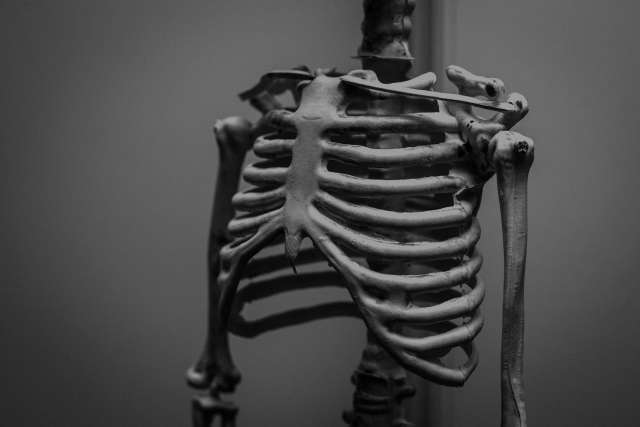
The condition is made possible by the distinctive anatomy of the rib cage. A light and airy framework, it is surprisingly strong. The rib cage supports the upper torso and protects the heart, lungs and other anatomical structures. It is also quite flexible. Made up of a combination of bone, movable joints and flexible cartilage, it allows us to bend, twist and stretch. It is also able to absorb shocks and to expand with each breath.
Of the 12 pairs of ribs that make up the thoracic cage, the top seven attach directly to the sternum. The next three pairs have an indirect connection to the sternum through a chain of cartilage. It is these cartilage connections that are involved in slipping rib syndrome. Known as interchondral joints, they can become lax and unsteady. This allows the cartilage at the end of the rib, along with the rib itself, to move -- or slip -- in and out of alignment. They can brush against neighboring tissues, including the intercostal nerve. These nerves run along a small groove on the rib's bottom edge and convey a range of sensory information.
Everyday actions, such as a sneeze, cough or stretching motion, can cause an unstable rib to come into contact with an intercostal nerve. This can result in sudden and often severe pain. A slipping rib can also cause inflammation and lead to regional pain that is difficult to pinpoint. In some people, a shift of the rib is accompanied by a sensation of movement, like popping, clicking or snagging.
When conservative treatments such as nerve blocks, nerve ablation or physical therapy are not successful, surgical repair may be considered. In one approach, the unstable cartilage is removed. A newer, cartilage-sparing approach focuses on stabilizing the mobile rib with sutures, cartilage spacers or similar devices. Studies of surgical treatment have reported success rates ranging from about 70% to 90%. This depends on the patient's condition and the surgical approach. Unfortunately, problems can continue or resurface, even after surgery. It is also possible for the condition to affect additional ribs.
With this in mind, it would be wise to return to your surgeon for an evaluation. They will ask for a detailed postsurgical history, including the continued pain and cramping. They can reassess the repaired rib and look for other areas of instability, irritation or inflammation.
(Send your questions to [email protected], or write: Ask the Doctors, c/o UCLA Health Sciences Media Relations, 10960 Wilshire Blvd., Suite 1955, Los Angeles, CA, 90024. Owing to the volume of mail, personal replies cannot be provided.)