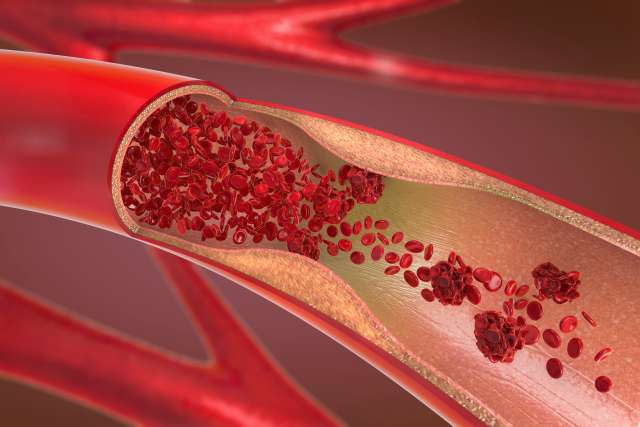
Cholesterol gets a bad rap, but the waxy, fat-like substance is an essential building block for cell membranes, hormones and Vitamin D. Produced in the liver, cholesterol hitches a ride on particles called lipoproteins to travel through the bloodstream.
These cholesterol shuttles are slotted into two main categories. “Good cholesterol,” or high-density lipoprotein (HDL), clears out excess cholesterol from the blood and delivers it to the liver for breakdown. “Bad cholesterol,” or low-density lipoprotein (LDL), carries cholesterol to tissues and can build up artery-clogging plaques.
But another type of lipoprotein also ferries cholesterol from the liver: Lipoprotein a.
Known as Lp(a), its structure is a modified LDL with a protein in its long tail known for creating blood clots. But unlike LDL, genetics control Lp(a). So diet, exercise and medications can’t lower levels.
A Norwegian scientist first detected it in 1963. But it’s only recently that Lp(a) has emerged as a significant independent risk factor for cardiovascular disease.
According to a 2022 cover story in the magazine of the American College of Cardiology, Lp(a) was “hovering in the shadows,” until several decades of research moved it into the spotlight. And new drugs directly targeting Lp(a) are in clinical trials. They may hold promise for the 1 in 5 adults who have high levels.
Knowing your Lp(a) is crucial, according to Karol Watson, MD, PhD, a member of the editorial advisory board for the Lp(a) Forum, a global initiative to bring awareness, knowledge and understanding of the importance of Lp(a).
Dr. Watson, a co-director of the UCLA Program in Preventive Cardiology, answered our questions about Lp(a) below.
A simple blood test can measure levels of Lp(a). How often should it be checked?
Dr. Karol Watson: Since Lp(a) is genetically determined, most of the levels do not fluctuate through your life. They're pretty stagnant. So most of the guidelines around the world suggest that you check Lp(a) just once in your life. Then you’ll know if you're high, low, or normal.
How are the levels broken down?
Dr. Watson: This is where it gets a little difficult. There are two major ways in which Lp(a) is reported. One is milligrams per deciliter, and one is millimoles per liter. So when you get your lab results, you have to make sure you're seeing which value they're expressing it in, because the numbers are different.
If it’s expressed in milligrams per deciliter, you want it to be less than 30. That's a normal level. If it’s expressed in nanomoles per liter, you want it to be less than 75.
Most of the world uses nanomoles per liter, and that's what many of the organizations recommend we use here in the U.S. But many of our clinical labs still check in milligrams per deciliter. I believe that's what we use at UCLA Health.
If the test shows a high level of Lp(a), what does that mean for someone’s health?
Dr. Watson: A high level of Lp(a) is associated with an increase of cardiovascular events such as heart attack, stroke, or dying of cardiovascular disease. It's also associated with an increased risk of aortic valve stenosis which restricts blood flow to the aorta, the main artery that supplies oxygenated blood to the body.
If cholesterol testing indicates normal levels, is it still necessary to test for Lp(a)?
Dr. Watson: Everyone should have Lp(a) tested at least once in their life. It's a hidden risk for heart attack and stroke that won't be picked up by standard cholesterol testing.
Are there certain groups which have higher Lp(a) levels because of their genetic backgrounds?
Dr. Watson: Different ethnicities and races can have different levels. African Americans have much higher levels of Lp(a) than the general population. South Asians also have higher levels. So those are two groups we specifically look out for.
We don't have any sex-specific guidelines. It's a potential risk for everybody.
What are the current treatment guidelines for someone with a high Lp(a) level?
Dr. Watson: We have to modify every single modifiable risk factor you have. One that you can change is LDL. The major strategy now is to drive your LDL cholesterol down even lower. If you drive the LDL low enough, the risk from Lp(a) may drop out.
We also have to lower your blood pressure, check that your glucose levels aren’t high and make sure you have optimal body weight. That's how we treat it.
What about medication?
Dr. Watson: There are three drugs that specifically lower Lp(a) that are in Phase III testing right now. Everybody's getting excited about them, but we must wait on the results. You don't know for sure until you see the data.
Knowing your Lp(a) value gives us a much more complete idea of your lipid-related risk. Once you know you can then be more tailored in your prevention treatment approach.
And one day, specific Lp(a) lowering medications might be widely available.